Grow a Few Flowers You Can Bring Indoors
A small patch of flowers can supply a few stems for the table without turning the whole garden into a production project.

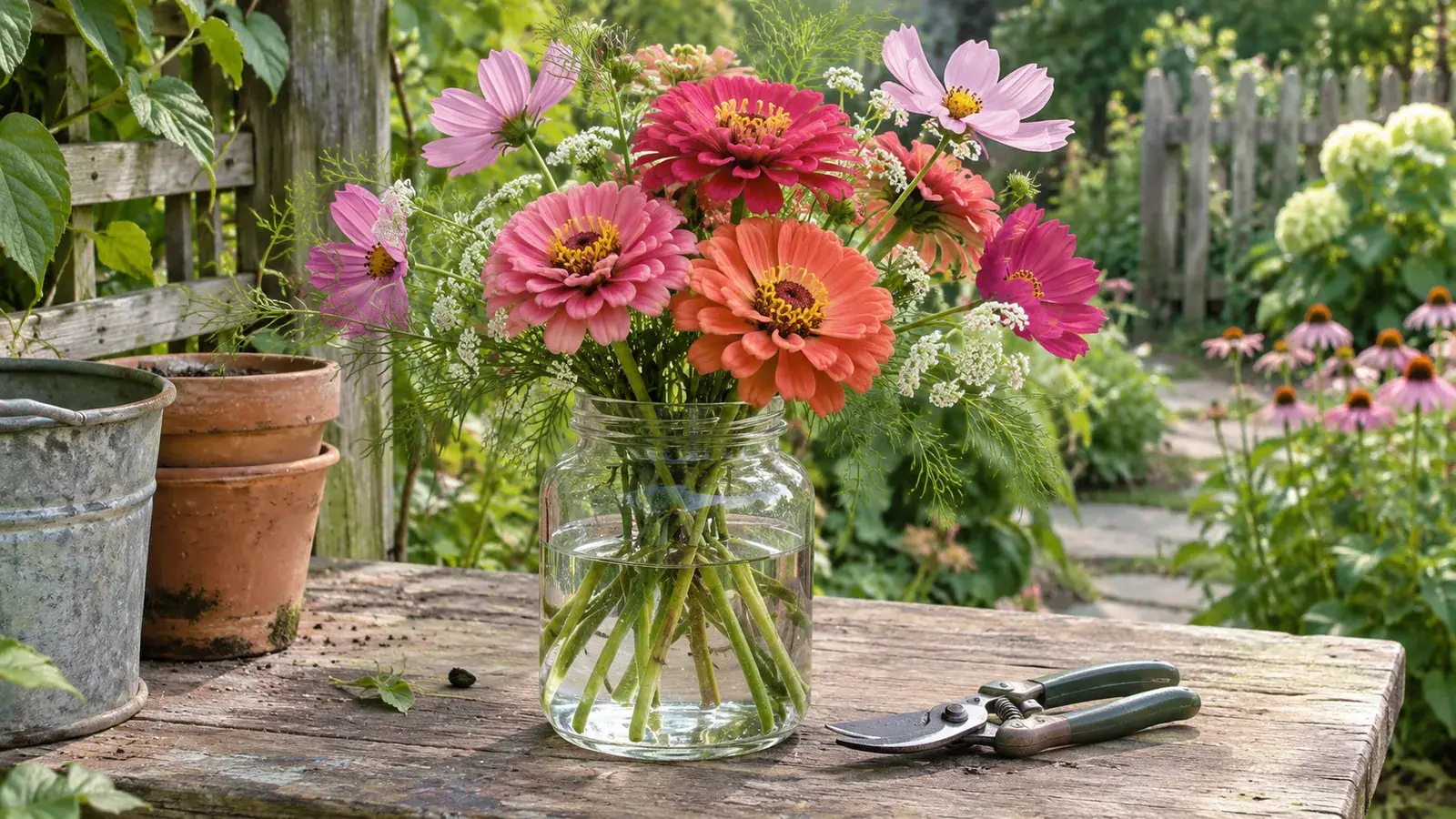
A homegrown bouquet does not have to fill a large vase. Three good stems in a small bottle can be enough to bring the garden into a room. Thinking at that scale makes a first cutting garden much less intimidating.
Begin with the vase you actually use and the amount of space you are willing to tend. Then choose flowers suited to both your growing conditions and the kind of arrangement you enjoy.
Choose for stems as well as flowers
Some compact bedding plants look wonderful outdoors but have stems too short for the vase you imagined. Read mature height and growth habit, and look for varieties recommended for cutting.
Zinnias are one possibility for a sunny, suitable site. University of Minnesota Extension describes their usefulness in cut-flower displays. That does not make every variety right for every garden; compare size, spacing, and local growing requirements before choosing.
You might begin with one main flower and one supporting plant whose foliage or smaller blooms you like. A limited selection is easier to observe than a bed filled with unfamiliar plants. Do not select plants solely because a photograph shows them together in a bouquet.
Make the patch easy to reach
Choose a position with the light the plants require and practical access to water. Leave room to reach the flowers without standing on the planting area or pushing through thorny growth.
If your existing garden is small, you can add a few cutting plants among other flowers rather than setting aside a separate bed. Be honest about how you will feel after cutting them. If removing a flower from the border always feels like a loss, a small dedicated patch may be more satisfying.
Containers can work for suitable varieties, but they bring their own watering and space requirements. Match the pot to the plant rather than assuming every flower will stay small because its container is small.
Follow your season, not someone else’s calendar
Use local guidance and the seed packet or plant label for planting times. A spring planting date that works in one region may be too early in another. Tender annuals need conditions appropriate to their growth; a date printed in an article cannot replace your local weather and frost information.
Start with a manageable number of plants. Leave the recommended spacing even when the young plants look lonely. Filling every gap at planting time can create crowding later.
Keep the labels and note which flowers you actually enjoy cutting. That record will help you buy fewer, better-suited plants the following season.
Bring the flowers inside thoughtfully
Use clean cutting tools and a clean vase. Learn the right harvest stage for each flower; not every bud will open after cutting. Remove foliage that would sit below the water line and maintain fresh water as needed.
Arrange loosely at first. One strong stem can establish the shape, with a few others placed around it. You do not have to imitate a florist’s dense bouquet. The archive’s flowers from the garden is a starting point for appreciating a more personal arrangement.
Keep bouquets away from pets or children who might eat them, and check plant-specific toxicity if that is relevant in your home. Enjoying a flower indoors also means choosing where it belongs.
Know someone who would enjoy this?