The Fall Garden Doesn’t Need to Be Cleared All at Once
Look closely before cutting everything back. Some of the garden’s quieter forms deserve a longer season.

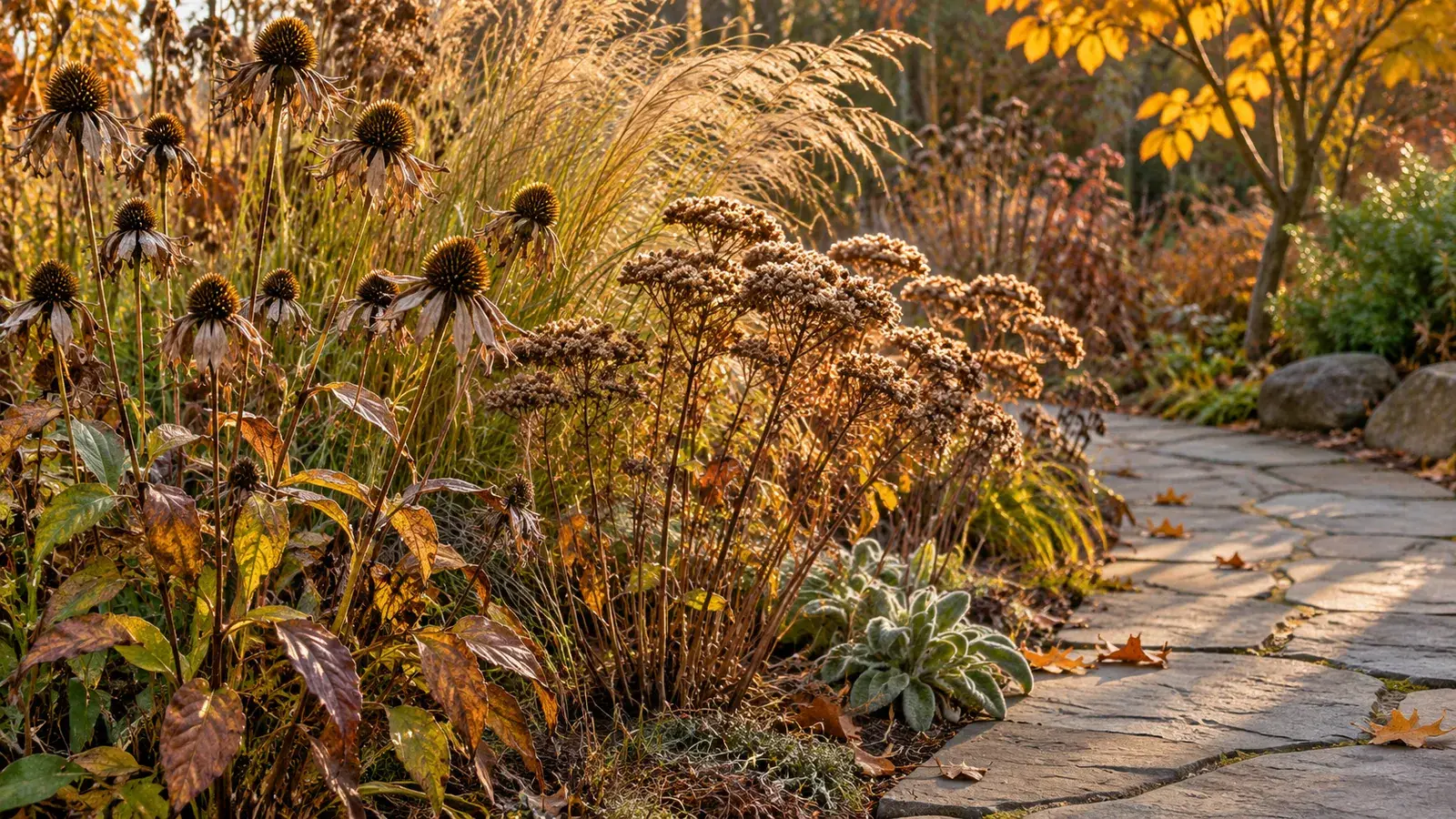
A flower bed can look finished for the year while still having plenty to offer: the outline of seed heads, the color of aging leaves, or stems that catch low light. Clearing everything at once removes those details along with the work you meant to tidy.
A selective cleanup begins with looking. Keep what has a useful role, remove what creates a genuine problem, and allow the garden to change gradually.
Separate appearance from plant health
A brown stem is not automatically diseased. Equally, leaving every piece of plant material is not automatically beneficial. Identify what you are looking at before deciding.
If a plant has a disease problem, ask local extension staff how its affected material should be handled. Do not assume it belongs in a home compost pile or that the same cleanup advice suits every disease. Plants that spread aggressively or are invasive may need particular attention to prevent seed dispersal.
Your local conditions also matter. Wildfire guidance, property requirements, and the needs of particular plants can take priority over a general preference for a natural-looking winter garden.
Keep some structure where it makes sense
Healthy standing stems and seed heads can provide visual interest, and some plant stems serve as nesting habitat for insects. The Xerces Society’s habitat guidance explains why retaining appropriate stems can matter for stem-nesting bees.
Look at the bed from the house and from the path. A few clear shapes may be more pleasing than either a completely bare bed or a tangle you find frustrating. You can keep a selected area while tidying the edge around it.
Avoid cutting everything down simply because a neighbor’s garden is already cleared. Different plants and purposes can call for different timing.
Make the useful routes visibly cared for
Keep walking surfaces, steps, drains, and entrances clear as needed. An open route and a tidy edge can make a less formally managed bed look intentional without stripping the whole space.
Where leaves can remain appropriately in planted areas, avoid piling them indiscriminately over plants that will not tolerate the conditions. Know what is growing underneath. Ask for local advice if you are unsure how a particular bed should be managed over winter.
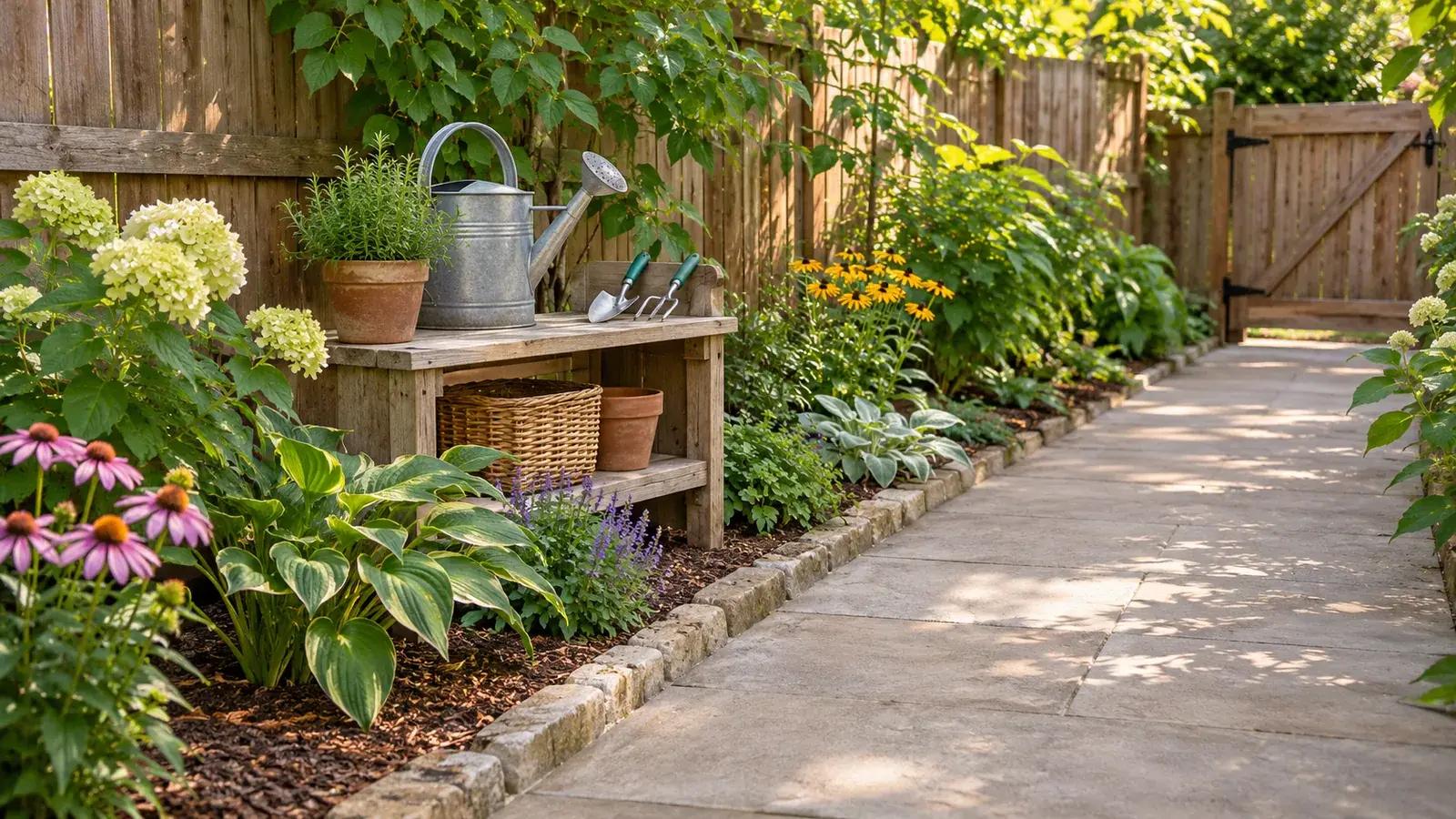
Move tools and empty containers to suitable storage, and deal with unstable supports before they become harder to handle. These practical tasks can matter more than making every plant the same height.
Leave yourself a record
Photograph the garden before the last foliage disappears. Note which plants looked good late in the season, which flopped across paths, and where you wished there were more structure. Those observations can guide next year’s changes.
The archive’s fall garden colors is a reminder that autumn interest is not limited to fresh flowers. Look for the color and shape already present in your own space.
A garden does not need to look abandoned to make room for seasonal change. It can look tended, with clear paths and considered choices, while still keeping some of its winter life intact.
Know someone who would enjoy this?