Plan a Small Garden for More Than One Lovely Week
A small garden can change through the year without needing a new display every month.

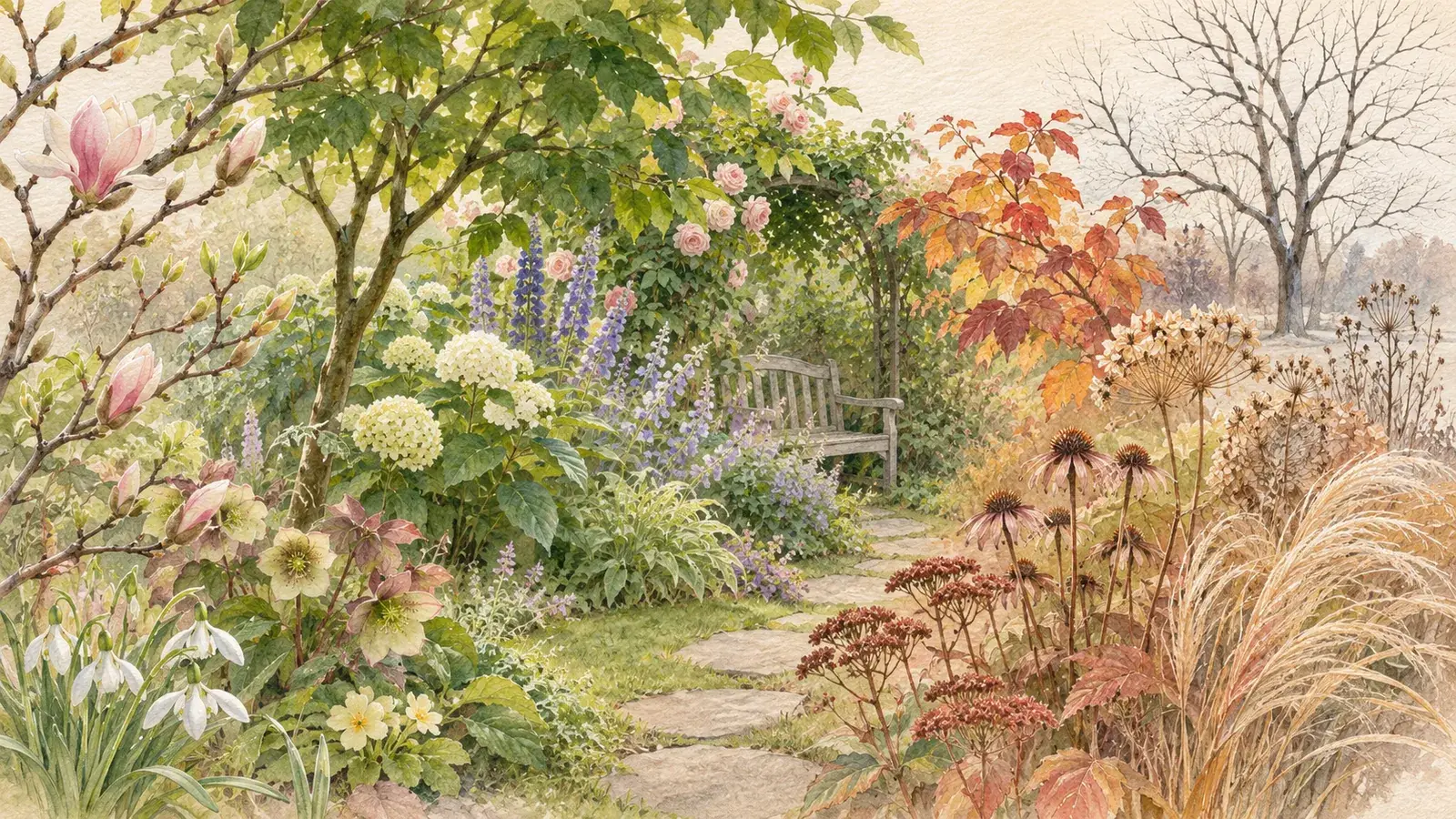
A garden can be glorious for a week and oddly empty for much of the year. Adding more flowers is not always the answer. In a small space, shape, foliage, and the placement of a few lasting features can provide interest between flowering moments.
Start by recording what the garden already does. You may need to fill only a few gaps, not replace the whole planting.
Make a calendar of what you actually see
Divide a page into four seasons and write down the plants or features you notice in each. Include emerging leaves, fall color, bark, seed heads, and the view of an evergreen—not just flowers.
Photographs help, particularly if you take them from the same place. A view from the kitchen window may matter more to you in winter than a corner you rarely visit then.
Mark the quietest season. That is the first place to investigate. Buying whatever is flowering during your next nursery visit may reinforce the season you already have covered.
Give each addition a job
A shape that remains when flowers are gone
A suitable shrub, durable container, or other modest structural feature.
Interest close to a seat or window
Distinctive foliage, bark, or a seasonal detail visible from that position.
A gap between flowering periods
A locally suitable plant whose season complements what is already there.
A calmer overall appearance
Repeating a plant or color you already like instead of adding another unrelated specimen.
These are design choices, not a universal planting list. Check mature size, light, soil, water needs, and local suitability before buying. A plant that outgrows the space can undo the simplicity you hoped to create.
Let foliage carry part of the design
Look at leaf size, shape, and color in combination. Fine leaves beside broader ones can create interest even without flowers. Repeating a foliage color can also connect separate parts of a small garden.
Avoid crowding every available gap. Young plants often need more space than they appear to need at purchase. Follow appropriate spacing and allow the planting to develop before deciding it looks unfinished.
A container can offer a seasonal accent, but consider the watering and replacement work involved. One well-placed pot may be more enjoyable than a collection that must be constantly refreshed.
Keep the quieter seasons visible
The archive’s California winter garden shows one climate’s seasonal possibilities. Use it as visual inspiration, not a plant list for a different region. Your winter may involve snow, bare branches, or a very different set of growing conditions.
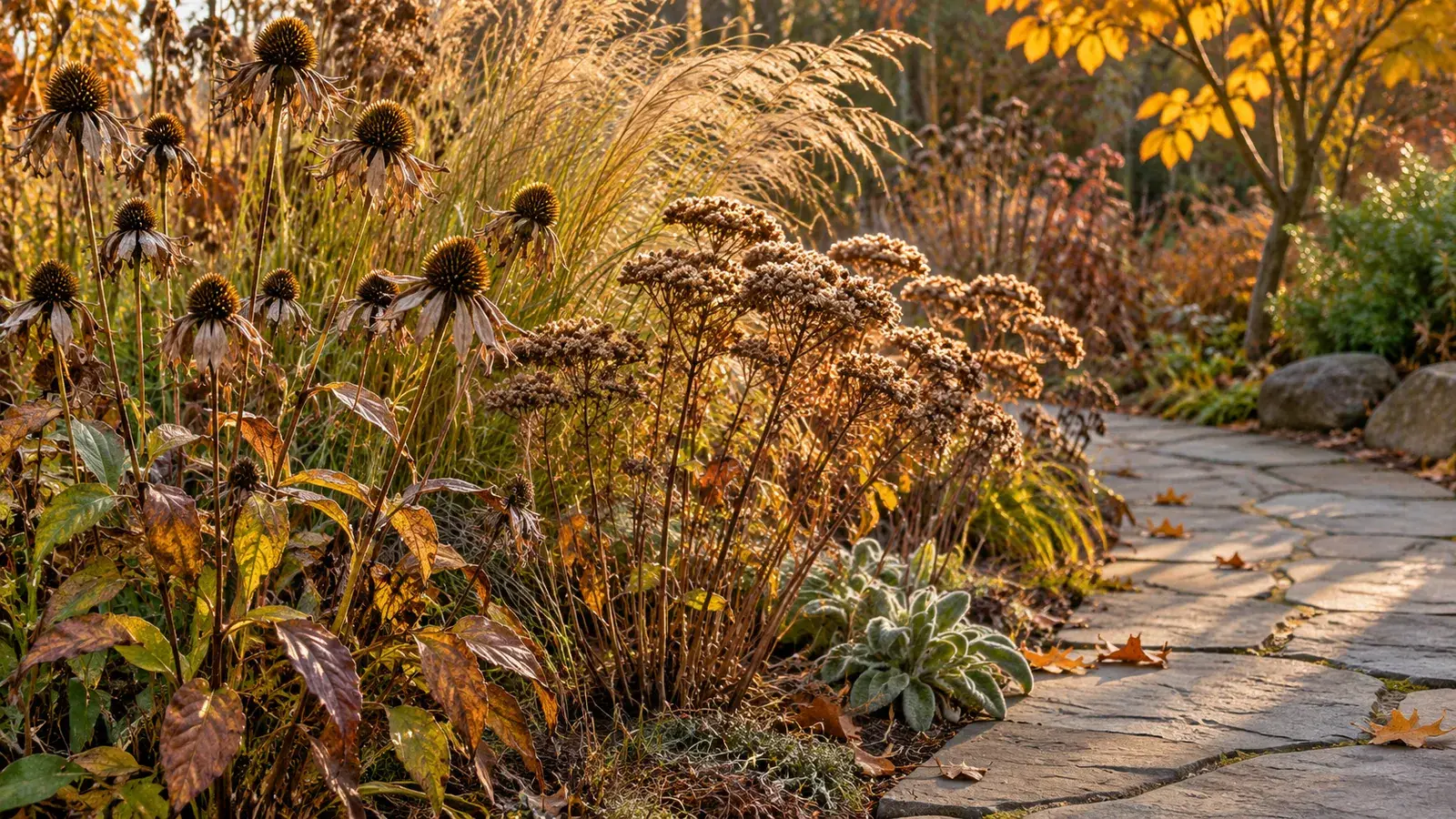
Where appropriate, healthy seed heads and stems can remain part of the view. Follow plant-specific care and local guidance rather than cutting everything back at the same moment.
Choose one improvement this season and observe it through the year. A small garden rewards patience: the aim is a sequence of things worth noticing, not a constant performance of peak bloom.
Know someone who would enjoy this?