Set a Table for the Dinner You Are Actually Having
The smallest table deserves attention, including on an evening when you are the only person sitting down.

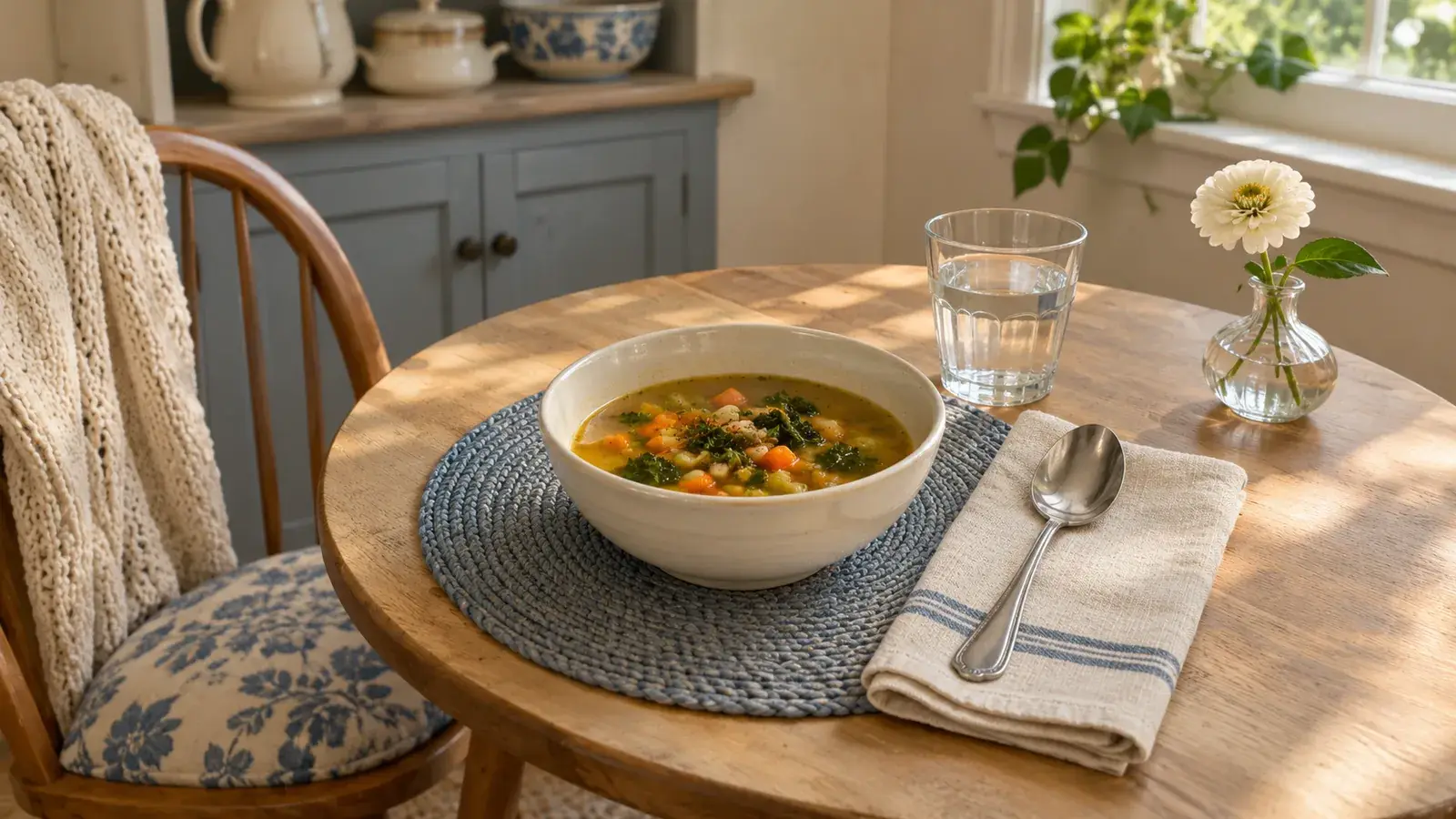
A bowl of soup feels different at a cleared table than beside the mail. The food has not changed. What changes is the invitation to stop doing other things for a little while.
Setting a pleasant table for one or two does not require special dishes or a meal complicated enough to justify them. Start with tonight’s dinner and make the space fit it.
Clear a place, not the entire house
Choose the table or counter where you sit comfortably. Move paperwork and unrelated objects to a temporary tray, leaving yourself a usable surface. You can deal with the paperwork later; dinner need not depend on finishing every household task.
Put out only what the meal requires. A deep bowl and spoon may be enough for soup. A sandwich might need a plate, napkin, and glass. Extra cutlery can make a small table feel crowded without adding pleasure.
If there are two of you, sit where conversation is easy. Across the full length of a large table may feel unnecessarily distant. Try adjacent sides or the smaller end, leaving room to move comfortably.
Let one detail do the work
Choose something already in the house: a clean cloth napkin, a small vase, a favorite water glass, or a place mat with a texture you enjoy. There is no need to make all four elements decorative.
A patterned plate looks good against a quiet surface. A plain plate can sit happily on a more colorful cloth. If dishes do not match, repeat one element—napkins, glasses, or the color of the place mats—to give the setting a gentle connection.
Use dinnerware you know is suitable for food. A decorative antique plate can remain on a nearby shelf rather than be pressed into service because it matches the flowers.
Keep the table useful after the food arrives
Place serving dishes on the table before completing the arrangement. This prevents the familiar moment when a lovely centerpiece has to move because there is nowhere to put dinner.
Keep flowers low enough that you can see the person opposite. For one place setting, a single small stem may be plenty. Strongly scented flowers can compete with the meal, so consider moving them to another surface.
The archive’s spring and summer tablescapes offers visual ideas to borrow selectively. A color combination may be all you want from a larger display.
Give dinner a beginning and an end
Fill your glass, bring over the food, and sit down before returning to unfinished tasks. If you enjoy music, put it on before the plate is ready. If you prefer quiet or a book beside you, that is a valid dinner arrangement too.
Think about cleanup while choosing the setting. A washable place mat and everyday dishes may make a weekday meal easier than delicate linens and handwashing. Save elaborate arrangements for the occasions when making them is part of the pleasure.
Afterward, clear the dishes and leave the little vase if you enjoy it. Tomorrow’s table will already have a beginning. The purpose of the effort is not to make an ordinary meal look extraordinary; it is to make that meal feel worth sitting down for.
Know someone who would enjoy this?