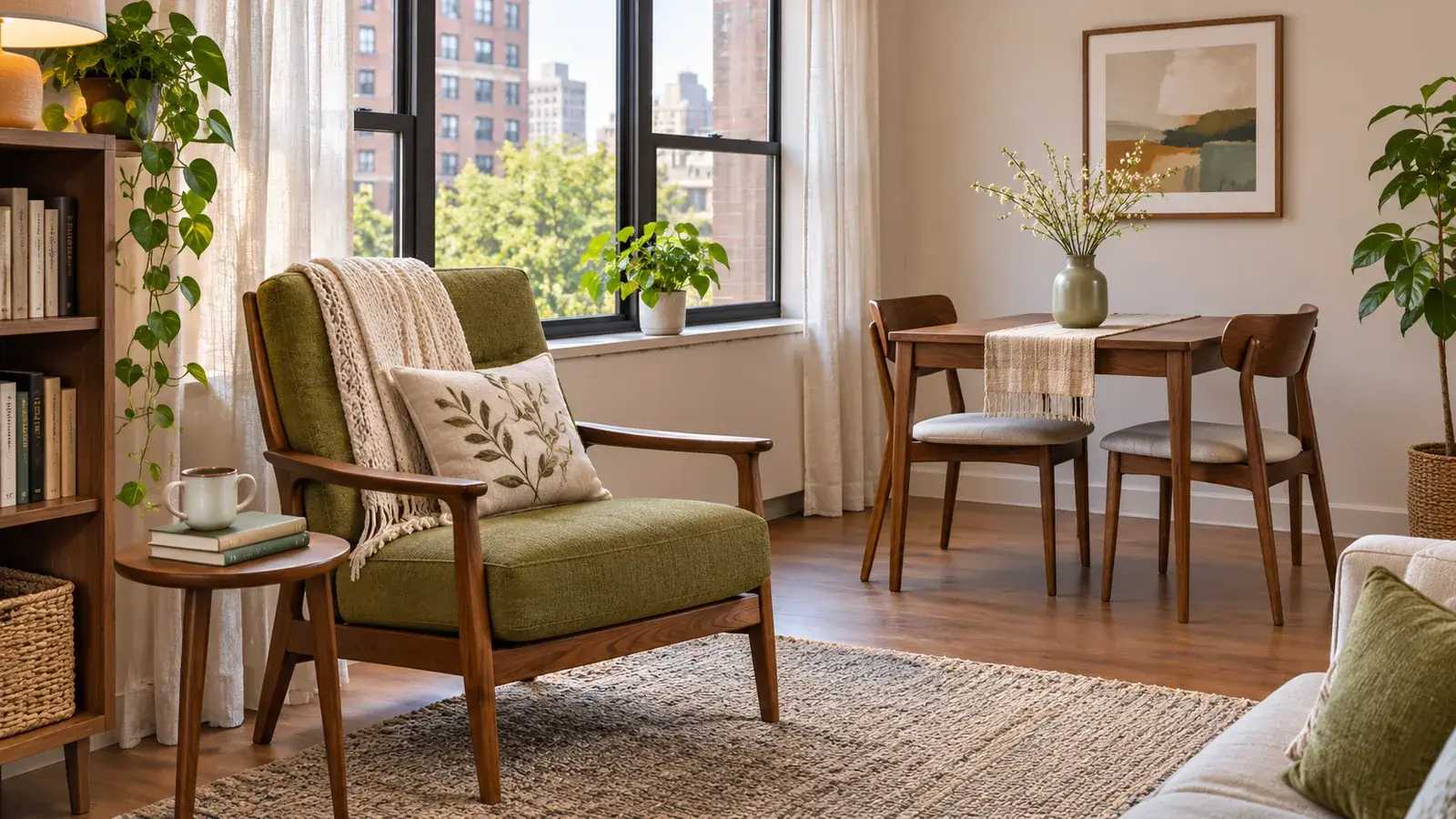
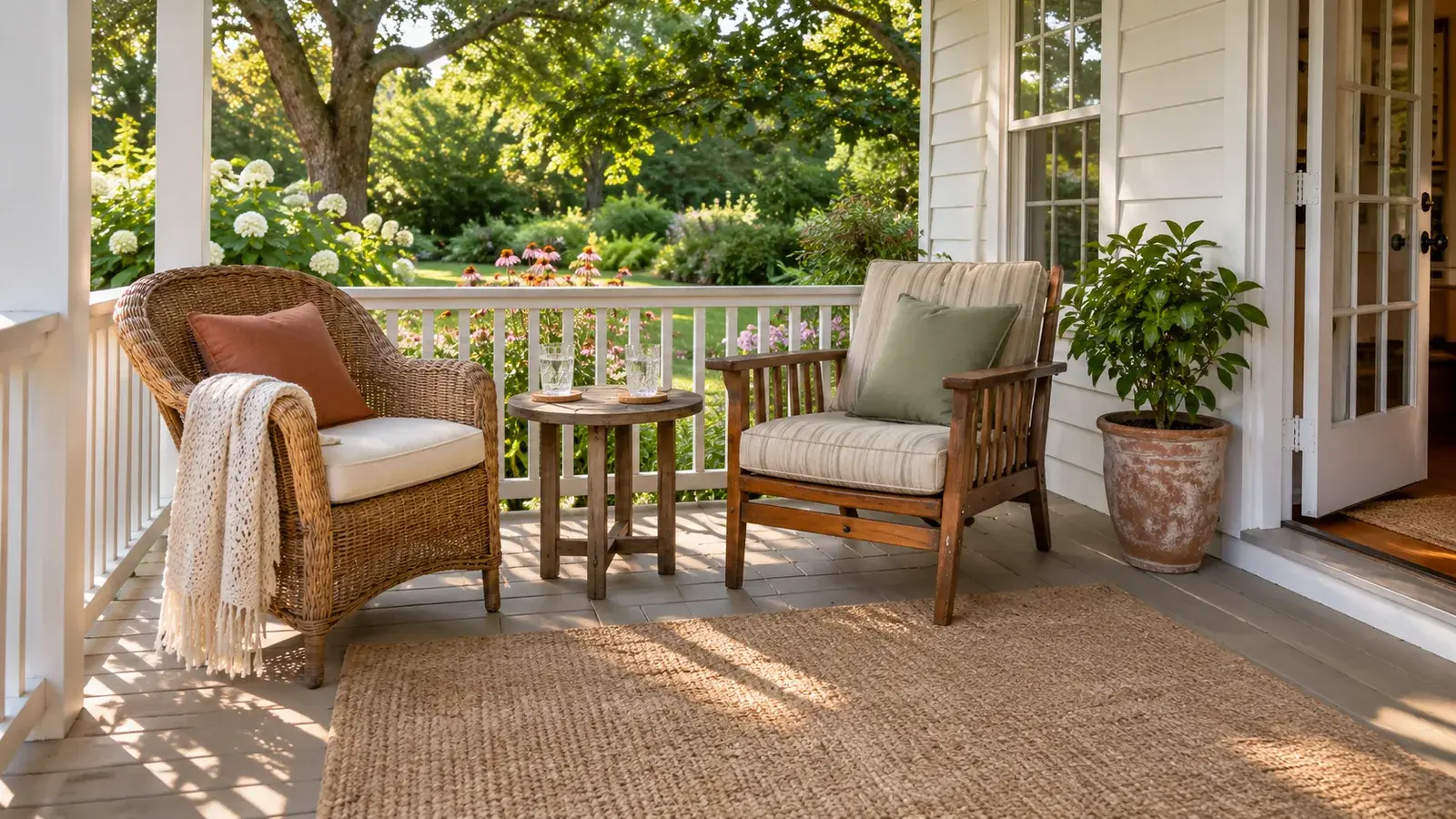
Let Your Home Change With the Season—Using What You Have
A shift in color, light, or placement can make a familiar room feel newly noticed.

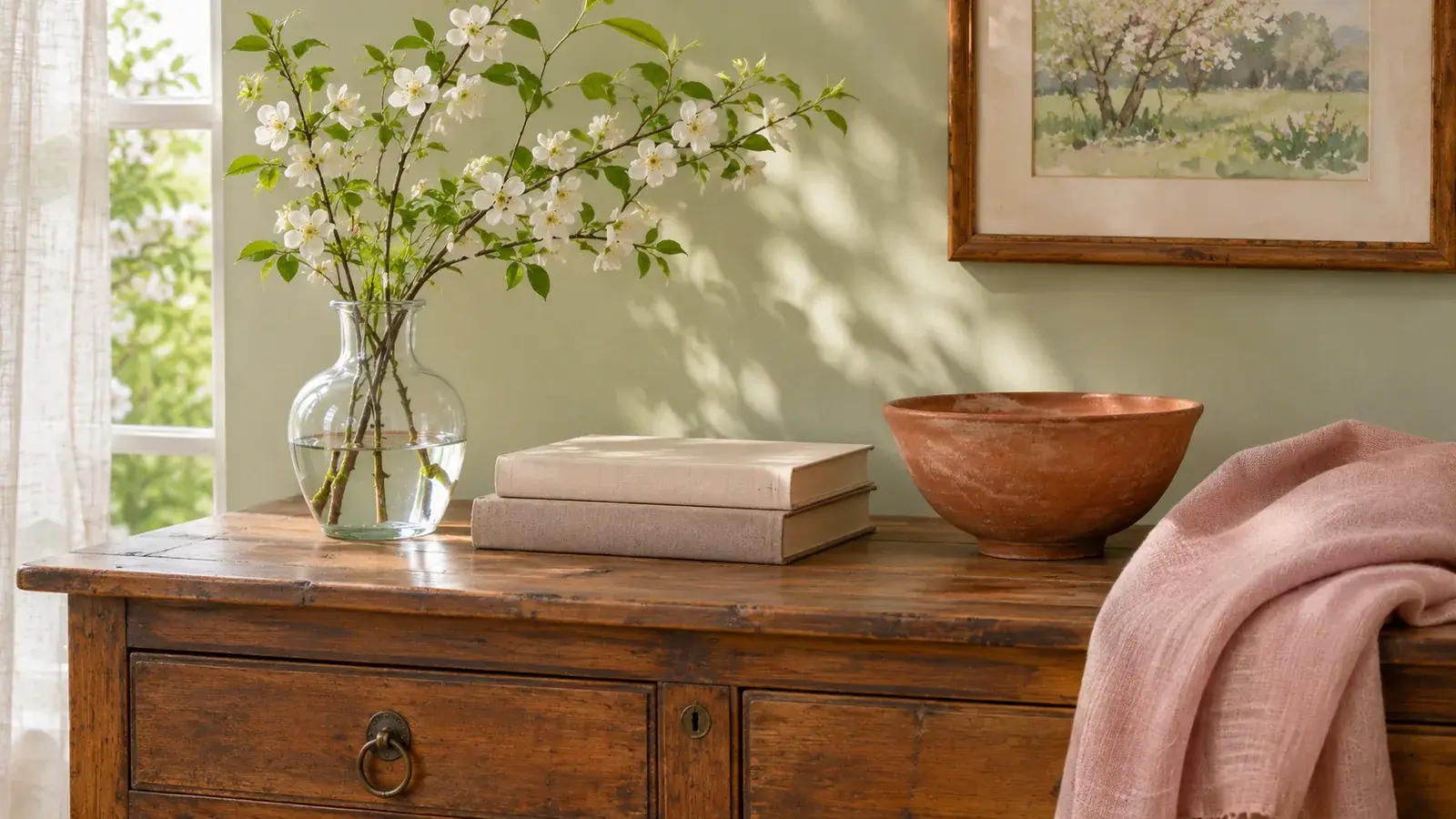
Seasonal decorating can become a cycle of buying things that spend most of the year in storage. A quieter alternative is to change what you notice: the cloth on a table, the objects grouped on a shelf, the way a chair faces the light.
Begin by looking at what you already own. A room can acknowledge a new season without announcing a theme.
Edit one surface
Choose a shelf, mantel, or small table and clear it. Look at the space before putting anything back. You may find that it needs fewer objects than you expected.
Select one thing you want to notice now: a vase, a framed picture, a bowl, or a small object with a pleasing shape. Add companions only if they help the arrangement. Leave enough clear space for the surface’s everyday use.
This is a useful opportunity to move something from a less-seen room. A familiar object can feel fresh simply because the light or background is different.
Change a texture before changing the furniture
Look through the throws, cushions, table linens, and other textiles you already have. A lighter-looking fabric or a different color can shift the room’s mood without a large rearrangement.
Choose what suits the actual weather and your comfort. A calendar date does not mean you have stopped needing a warm throw. Seasonal change is more convincing when it responds to the life in the room.
Check care needs before putting out a delicate textile on a frequently used chair or table. Something that makes you anxious about ordinary use may belong elsewhere.
Borrow a color from outside
Notice what is appearing beyond the window: soft new leaves, muted earth, brighter flowers, or the quieter tones of bare branches. You do not need to reproduce the scene literally. Repeat one color in a book cover, a cloth, or an object already in the house.
A few flowers can be lovely, but the arrangement does not have to be large. Choose appropriate plants for your household, including any pet-related considerations, and use a container that protects the surface underneath.
The archive’s color in a spring garden offers a way to look for combinations rather than a list of things to buy. A pale flower beside dark foliage may suggest enough of a palette for a room.
Keep the useful arrangement useful
Before moving a chair or table, think about the habits it supports. A new view is appealing, but not if the reading lamp is suddenly out of reach or the route through the room becomes awkward.
Try small changes first: angle a chair, move a table a little, or change the objects visible from your usual seat. Live with the arrangement for several days before deciding it needs another purchase.
Store what you rotate out in a way that makes it easy to find again. A quick label or photograph can prevent a seasonal refresh from turning into a search through forgotten boxes.
Stop when the room feels pleasant to use. It does not need to look entirely different. Sometimes the best seasonal change is the one that makes you appreciate a few familiar things again.
Know someone who would enjoy this?