A Few Kitchen Herbs, Grown Where the Light Is
A sunny window and two herbs you actually cook with are a better beginning than a crowded decorative planter.

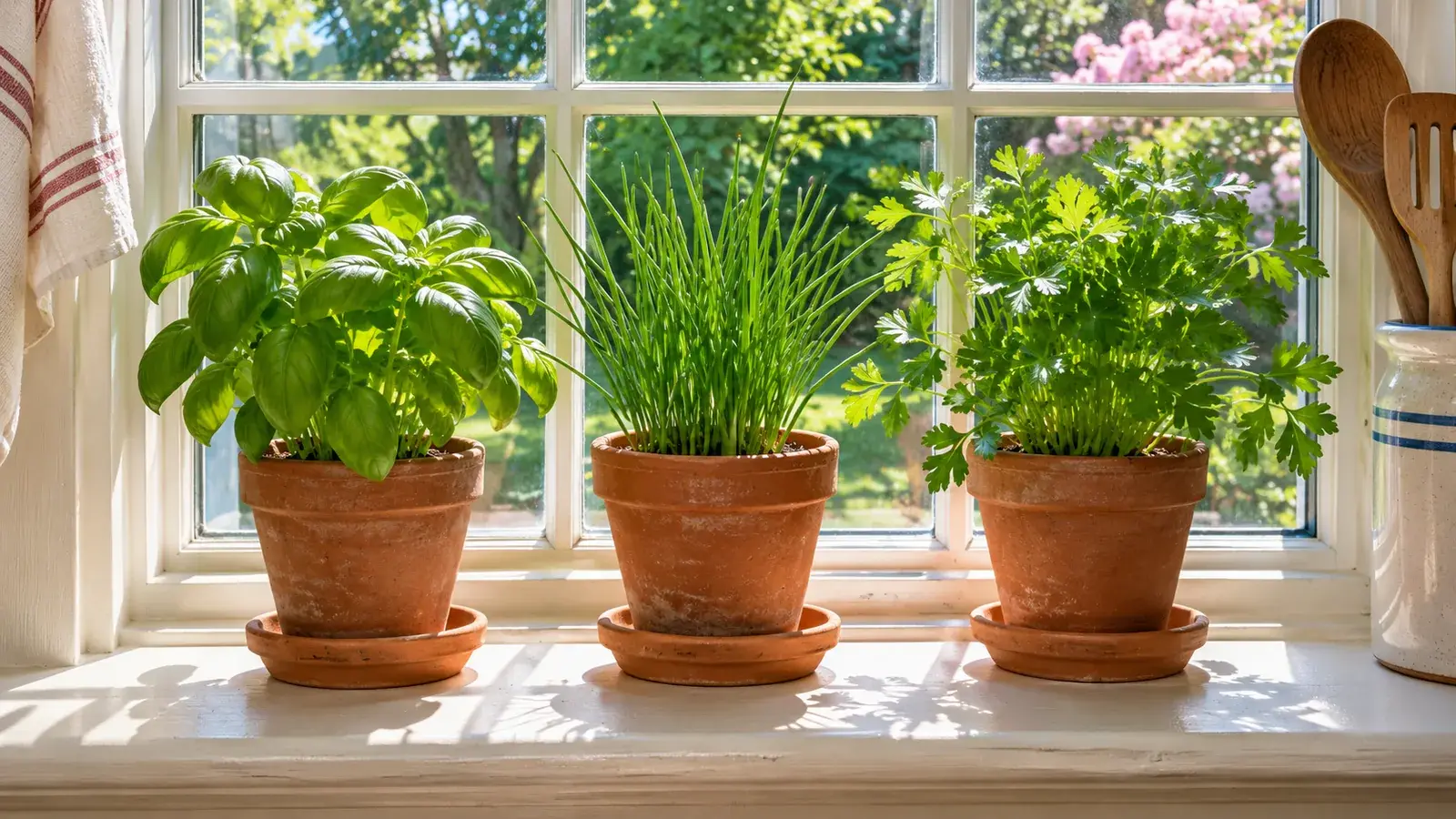
The kitchen window is not automatically the best place for kitchen herbs. It may look charming with a row of pots and still receive too little direct light for them to grow well. Begin by finding the brightest practical place, then decide which herbs you would enjoy tending there.
Two healthy plants that you use are more satisfying than a crowded collection struggling to survive.
Match the plant to the window
Observe how the light moves through the room. A window that feels bright to you may offer only a brief period of direct sun. Short days, nearby trees, and surrounding buildings can further limit what reaches the leaves.
Iowa State University Extension’s indoor herb guide lists herbs including chives, parsley, basil, and thyme as possible indoor choices, while noting that some others demand more light or attention. Choose from what suits your conditions and your cooking rather than assuming every herb wants the same care.
If you need supplemental light, follow the grow light manufacturer’s placement and timing instructions and keep the setup practical for your home. An indoor herb garden should not become a row of cords stretched across a work surface.
Give each herb its own pot
Separate pots let you adjust watering and move one plant without disturbing the rest. Use containers with drainage holes and a suitable potting mix. A decorative outer pot can hide a nursery pot, but check for collected water after watering rather than allowing roots to sit in it.
Begin with a plant small enough to handle easily. There is no need to buy an enormous container for a kitchen windowsill. The pot should accommodate the plant and be stable in its position, with room for leaves to grow without pressing against cold glass or a hot surface.
Label the plants if you are likely to confuse them. The label should name the herb, not simply say “edible.” Only cook with plants you can positively identify and know were grown for culinary use.
Check the soil before reaching for the watering can
Look at the plant and feel the potting mix. Watering needs change with light, temperature, and growth. A fixed Sunday watering appointment may be convenient but may not suit every pot.
Water as needed, let excess drain, and avoid leaving saucers full. If growth becomes weak or stretched, reconsider the light before trying to solve everything with fertilizer. Follow appropriate feeding directions for the plant and product rather than improvising a stronger dose.
Rotate pots when needed so growth is not continually leaning toward one side. Keep a simple note if you are learning: where the plant sits, when it was watered, and what changed.
Harvest for supper, not for a large batch
Take small amounts from established, growing plants, leaving enough healthy growth for them to continue. A windowsill pot is well suited to a few snips over eggs or a small garnish; it may not supply an entire recipe that requires handfuls of leaves.
If you enjoy the plants but rarely use a particular herb, change the selection next time. The useful kitchen garden is the one connected to your meals. For more small-space inspiration, explore the archive’s view from a kitchen window, then scale the idea to the light you actually have.
Know someone who would enjoy this?