Find Your Colors in the Clothes You Already Love
Start with the colors you reach for, then use a scarf, a jacket, or a print to help them work together.

The most useful color in your wardrobe may not be the one a chart recommends. It may be the blue you reach for when you want to feel like yourself, or the green scarf that makes several otherwise ordinary outfits more interesting.
A personal palette is a way to make dressing easier. It need not become a rule that excludes colors you enjoy.
Begin with three things you wear happily
Choose clothes or accessories you actually use, not pieces you admire but leave untouched. Lay them out in daylight and look for connections. Is there a shared warmth, a repeated shade, or a contrast you seem to enjoy?
Notice what each item contributes. A cream shirt may soften a dark jacket. A bright scarf may be the part of the outfit that feels most personal. A patterned blouse may connect colors you would not have combined on their own.
If your favorites seem unrelated, that is information too. You may prefer variety to a tightly coordinated closet. The aim is to create more useful combinations, not to make everything look alike.
Test color near your face without turning it into a verdict
Hold two familiar colors near your face in even daylight. Look at the whole impression rather than searching for flaws. Which one do you enjoy? Does either feel more like the mood you want for an ordinary day, a dinner, or an outing?
Hair color, makeup, lighting, and the other clothes in the outfit all affect the result. A color that feels too strong as a blouse may be lovely in a small earring or a printed scarf. You do not have to ban it.
Photographs can help you remember combinations, but phone cameras and screens alter color. Treat them as notes, not a definitive test of what suits you.
Use a connecting piece
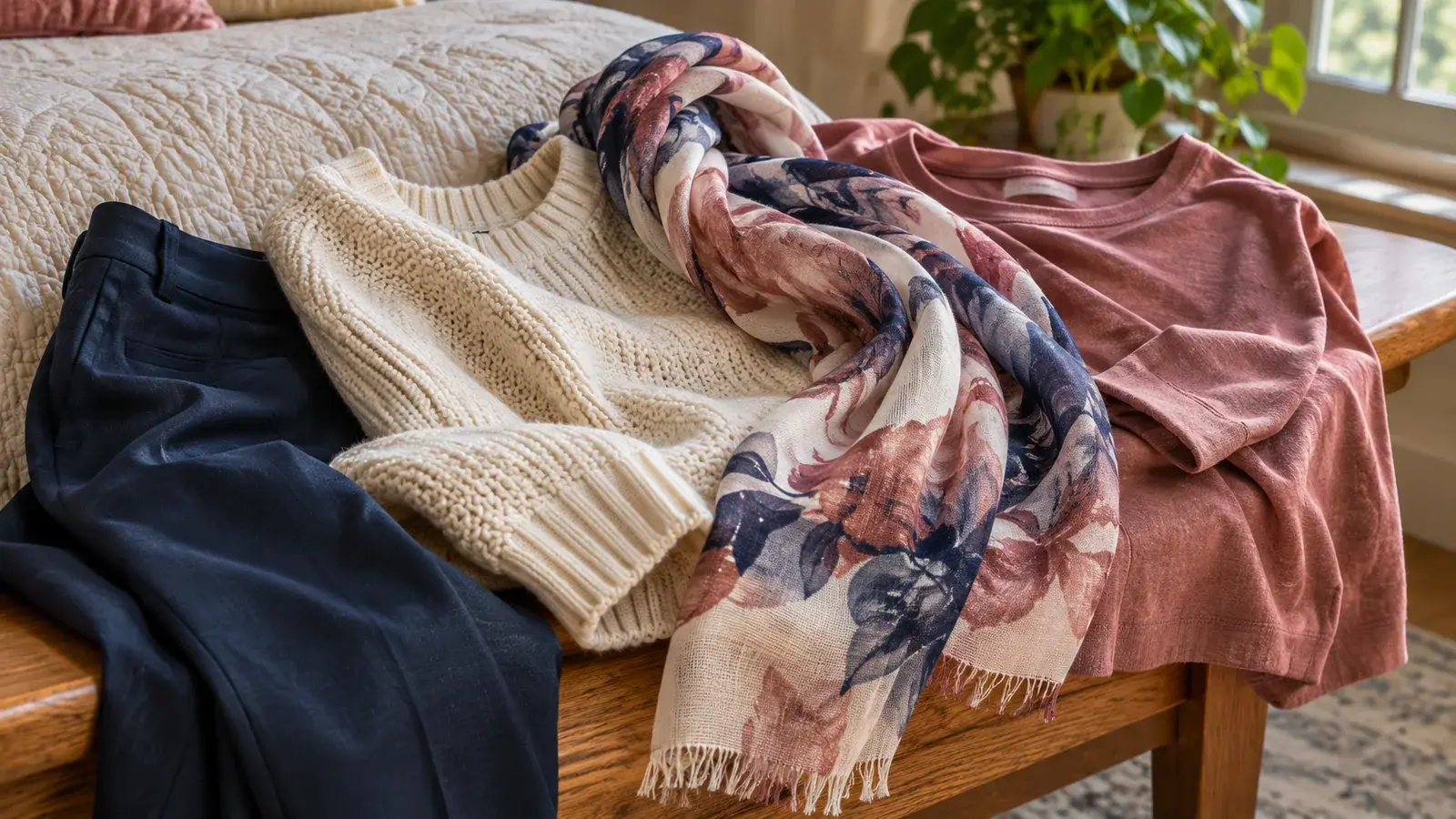
A print can do some of the coordination for you. Suppose a scarf contains navy, cream, and a muted pink. Try it with the navy trousers and cream top you already own. The pink can remain a small accent rather than a reason to buy another outfit.
Or repeat a color in two different textures: a soft knit with a smooth bag, a striped shirt under a plain jacket. The shades need not match exactly to feel intentional.
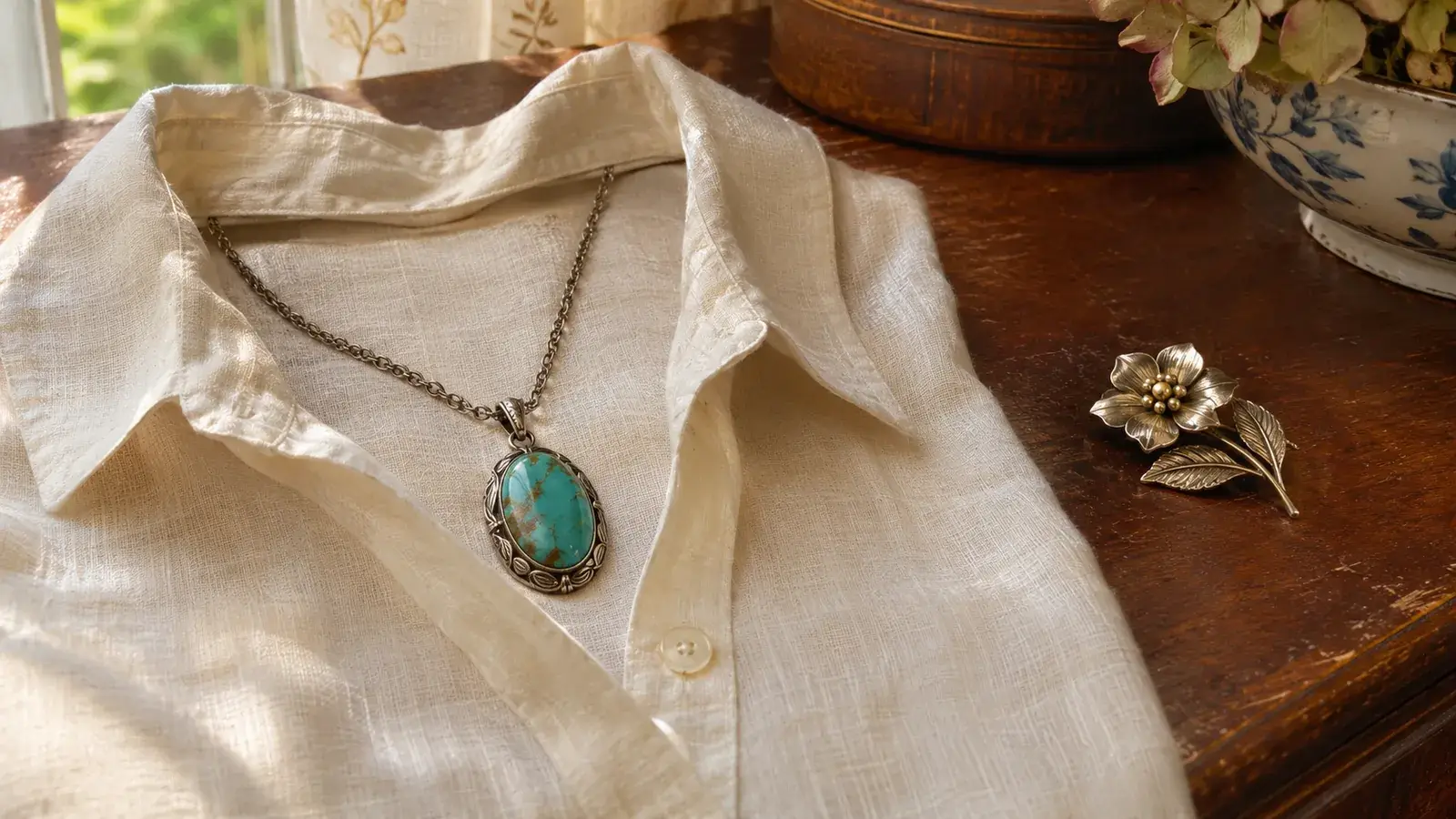
Try accessories you already have before shopping. The archive’s turquoise jewelry is a reminder of how a relatively small piece can set the tone for an outfit.
Make a short, useful shopping note
If you do identify a gap, describe the job: “a light layer that works with both my blue dress and cream trousers.” Carry a photograph or a small fabric reference when practical, and check the combination at home within the store’s return terms.
Be cautious about buying a color simply because it is labeled a seasonal essential. A new shade earns its place when you like wearing it and it works with your life.
Before putting everything away, assemble one combination you have not worn before. Hang the pieces together or take a quick reference photo. A palette becomes useful at the moment it saves you a decision on an ordinary morning.
Know someone who would enjoy this?