Should You Polish That Vintage Silver Tray?
A dark groove in a floral engraving and a coppery patch on a handle call for different decisions. Here’s where to look before you reach for the polish.

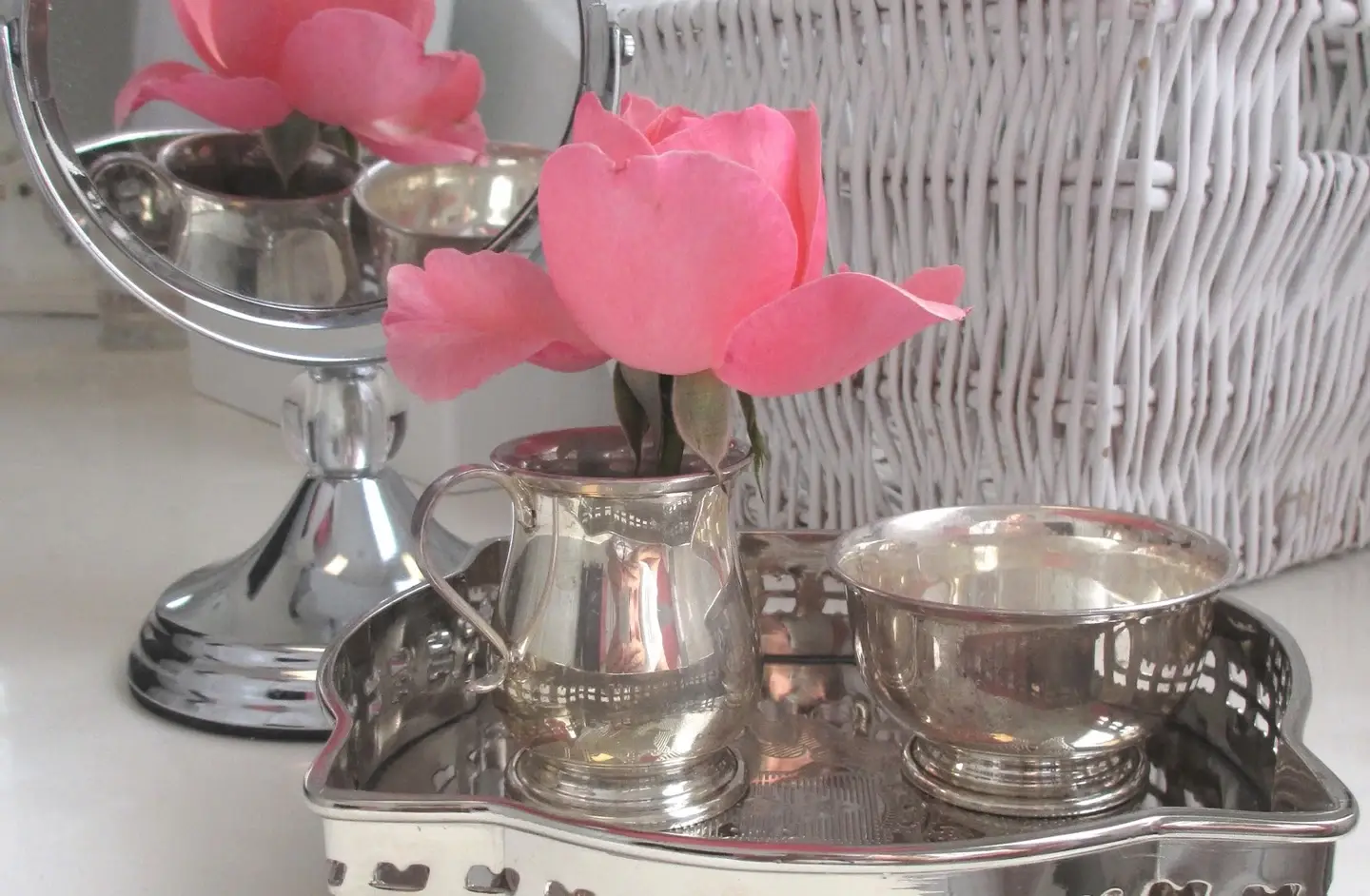
In August 2012, Suz set a little tray on her bathroom vanity with a pink rose from her garden. In the original photographs, the pierced edge of the tray casts a row of tiny shadows. The light catches the rim of a dish just big enough for a pair of blue earrings. The photograph tells us exactly why she liked the arrangement. It tells us very little about what the tray is made of.
If you have a tray like hers and one patch bothers you, leave it alone until you have looked at the underside and the points of wear. Tarnish forms on the silver surface. On a plated tray, a worn spot may be the metal underneath showing through. Polish cannot put the silver back.
Turn the tray over
Empty it first. Put a folded towel on the table so the rim has a soft place to rest. Look underneath for a stamped name or mark. Photograph it in light from the side, once close up and once with enough of the back in view that you can find it again. If all you can read is part of a name, keep the picture. A guess about the maker is a poor basis for choosing a cleaning method.
While the tray is upside down, look at how the feet and handles are attached. A hollow handle or a soldered joint is a reason to skip soaking. A gold-colored border deserves its own pause. If it is gilded, polishing can damage it. The Canadian Conservation Institute’s guide to silver care explains why these details matter even on a piece that looks quite sturdy.
Read the spot in daylight
Set the tray right side up near a window. If it has two handles, compare the tops of both, then look at the sheltered curve underneath each one.
A warm, copper-colored patch on the crest of a handle, especially if the same color shows through on other raised edges, is a reason to stop. Color alone cannot identify the metal. The location adds a clue: these are the places hands and polishing cloths reach first. For a useful visual comparison, look at the Institute’s photograph of a silver-plated copper tray with worn plating. In Figure 59, pink copper shows through on the high points of the design.
Now look into the narrow grooves around a leaf or flower. A little darkness there can make the outline legible from across the room. You might like it just as it is. Chasing the very last dark line has a cost: repeated polishing takes off a little silver along with the tarnish.
Give it the dresser test
Put the tray where you mean to use it and give it a job for an afternoon. Set a small vase on it, or a shallow dish for the earrings you take off at night. Then stand where you would ordinarily see it. Does the spot you noticed at the window even show from here?
If it does, and you want a brighter finish, use the photograph of the mark to seek care advice for that particular piece. If the finish is uncertain, the plating appears worn, or the tray is a family keepsake, show the whole tray and the close-up to a metals conservator before trying a treatment. There is no deadline. The rose will look lovely in the meantime.
Know someone who would enjoy this?