A Porch That Invites Someone to Stay a While
The invitation comes from a comfortable place to sit and a little room to pause, not from filling every corner.

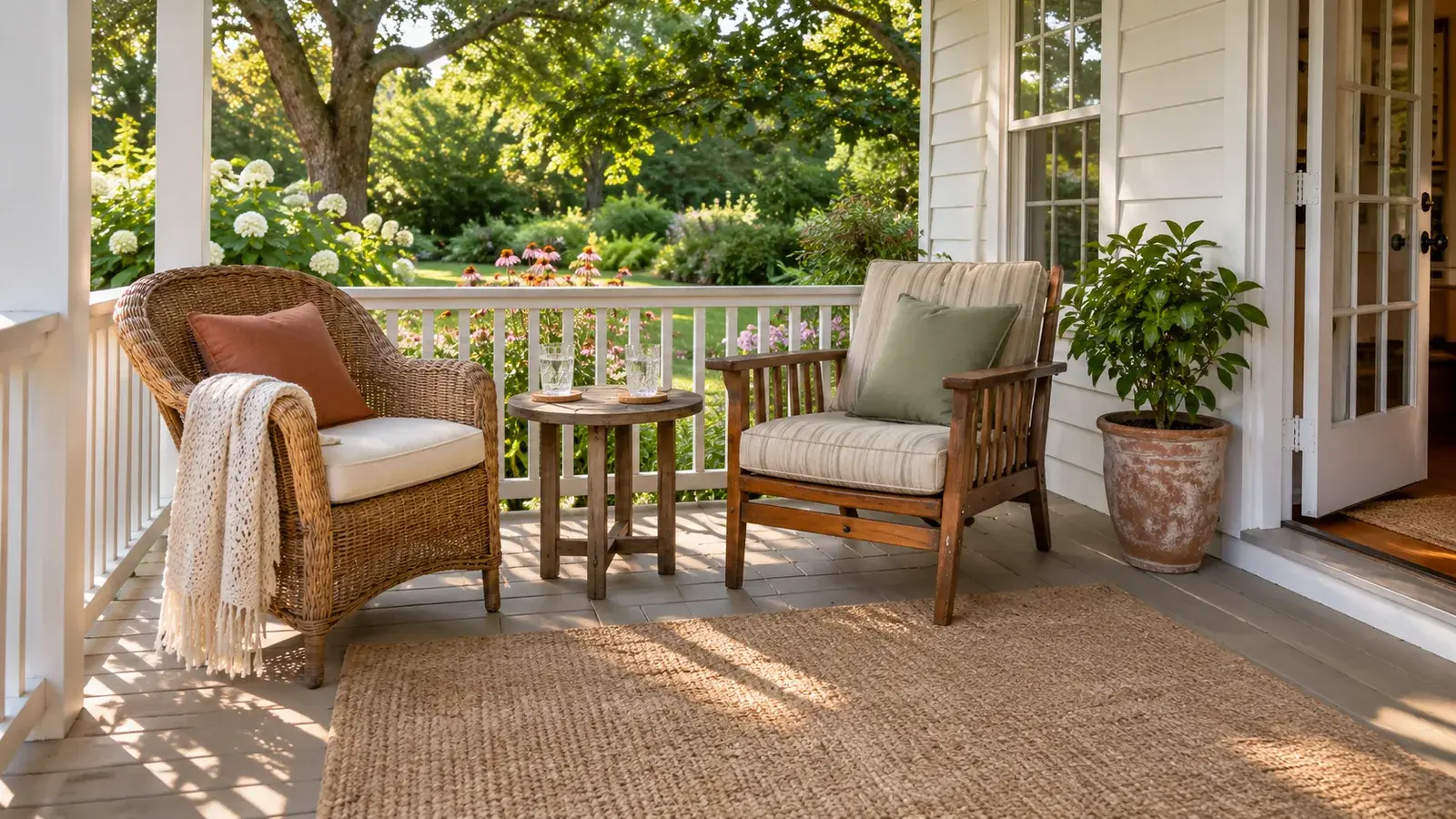
A porch can be beautifully decorated and still feel as though nobody is meant to sit there. The chairs face straight ahead, the table is out of reach, and the plants occupy the easiest path to the door.
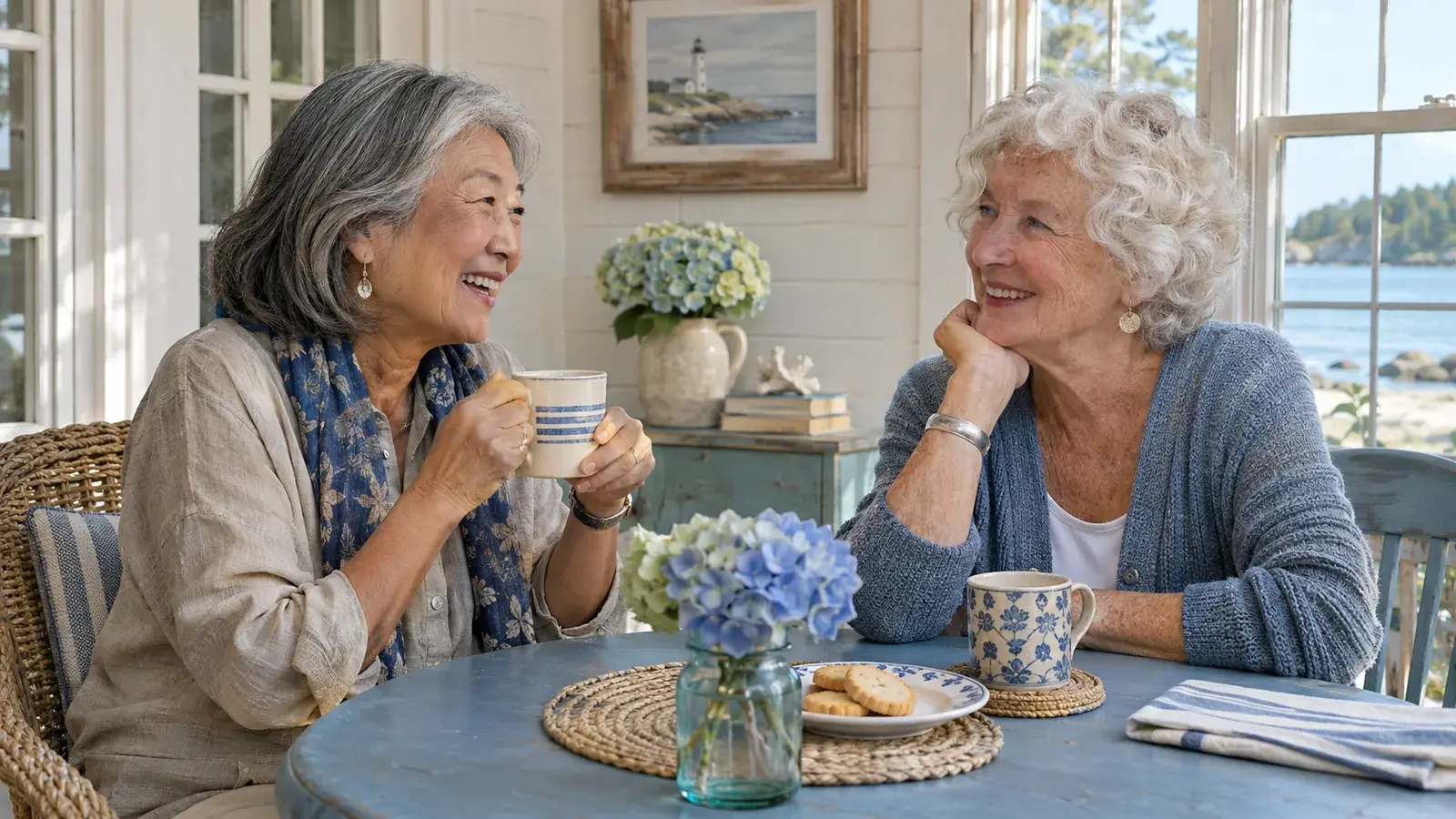
Begin with the conversation you would like to have. Where would two people sit comfortably, look at each other, and put down a glass? Let the arrangement grow from that.
Place the chairs before the pots
If space allows, turn seats slightly toward one another rather than lining them up like a waiting area. Test the arrangement with someone else or move between the seats yourself. Can you speak at a natural volume and see each other’s face without twisting?
Use chairs that suit the people who will sit in them. Seat height, depth, armrests, and firmness are personal considerations worth trying in person. A chair that looks charming in a photograph may not be one you want to spend an hour in.
On a narrow porch, one comfortable chair and a second seat brought out for a visit may work better than a permanent set that crowds the entrance. Respect the space’s practical limits.
Keep the route clear
Open the door fully and walk through with a bag or tray. Check where chair legs, plant pots, mats, and cushions sit. The route should remain usable when someone is actually seated, not only when the chairs are pushed in.
Keep any electrical cords out of walking areas and use outdoor equipment according to its instructions. If the space needs structural repairs or electrical changes, deal with those separately before decorating around them.
A small table is useful when both seats can reach it comfortably. If it obstructs the route, consider separate small surfaces or reduce the number of objects. The arrangement should not require a delicate maneuver every time someone arrives.
Add only what the setting can support
Choose plants for the porch’s light and exposure rather than for a brief seasonal display. Keep their mature size in mind. A plant that eventually blocks the chair or doorway will make the space less inviting.
Textiles can soften the setting, but think about rain, storage, and cleaning. If cushions need to come indoors every evening, decide where they will live. The easier the routine, the more likely you are to use the seats spontaneously.
A single color repeated in a pot and cushion can connect mismatched furniture. Our archive’s summer living is useful for borrowing an atmosphere without copying a whole arrangement.
Make the invitation ordinary
Keep the porch ready for a brief visit rather than a formal occasion. A clean seat and a place for a cup are enough. You do not need to offer a full meal because someone has stopped to talk.
If you prefer privacy, create it in ways appropriate to your space and any property rules, without blocking necessary access. You can enjoy a porch without making yourself available to every passerby.
Try using it for ten quiet minutes before inviting anyone. Notice what you want to move. A place that feels comfortable when you are alone is a good beginning for a place where conversation can linger.
Know someone who would enjoy this?