Summer Clothes That Feel as Good as They Look
The fiber label is only the beginning. How a garment is woven, lined, cut, and cared for matters in daily wear.

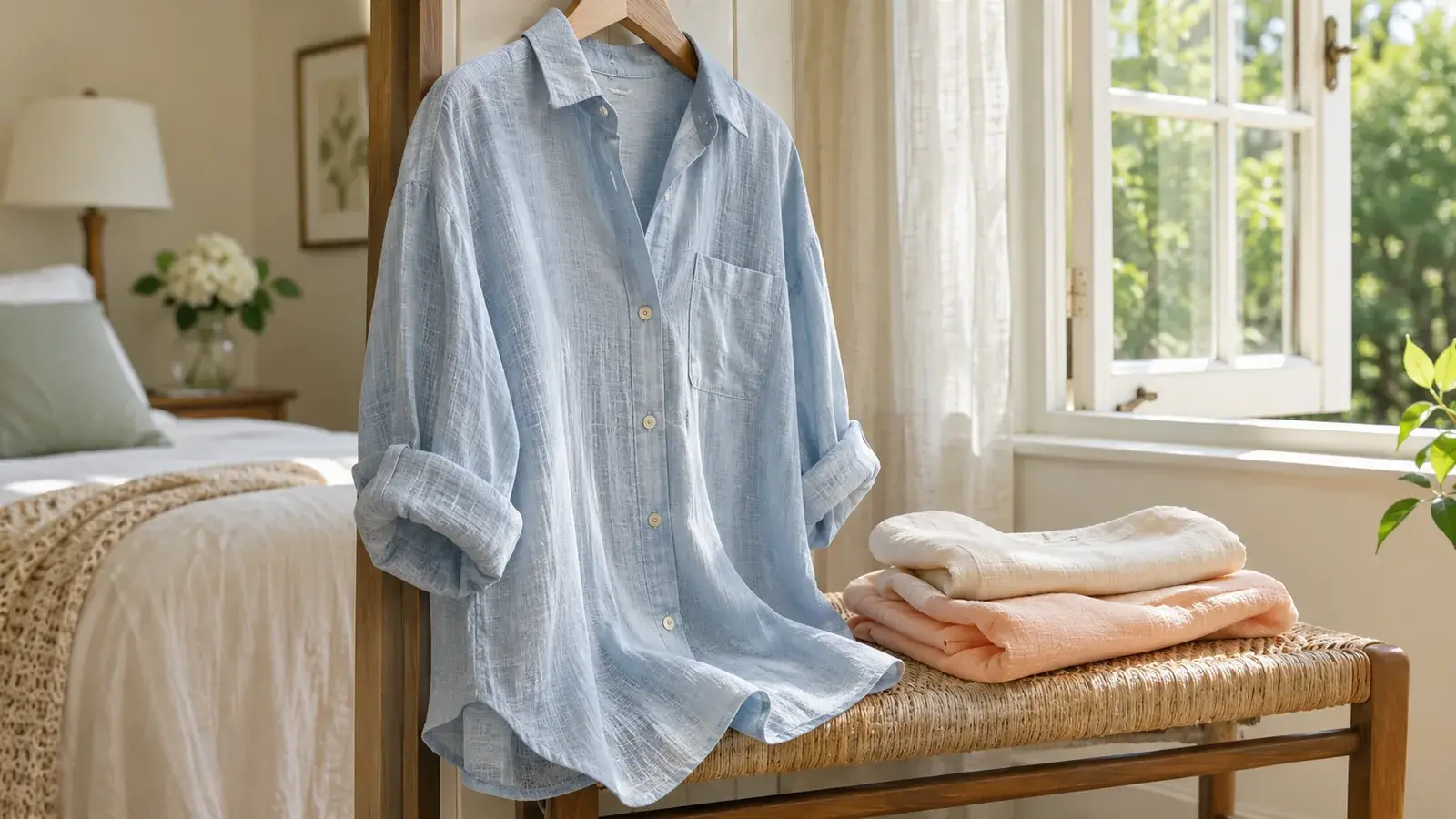
Two cotton shirts can feel quite different on a warm day. One is light and loosely cut; the other is dense, fitted, and lined in places that hold warmth. The fiber label tells you something, but not the whole story.
When choosing summer clothes, consider the complete garment: fabric weight, weave, lining, fit, coverage, and the care it will need. Your own comfort is the deciding test.
Look beyond the fiber name
Cotton, linen, rayon, and blends can all appear in summer wardrobes, but none is an automatic promise of comfort. Feel the fabric, hold it toward the light, and examine any lining. A garment that appears airy on the outside may have another layer underneath.
Look at the care label before falling in love with the cut. Some pieces need gentle handling or ironing you may not want to do regularly. Others may feel crisp in a store and soften or change after washing; follow the specific care instructions rather than assuming a fabric will behave like something similar you own.
If you shop online, use fabric composition and garment measurements as clues, then check the return terms. A photograph cannot tell you how the fabric feels against your skin.
Test room to move
Sit down and raise your arms. Does the fabric pull across your back or cling where you would prefer more room? Is the armhole comfortable? Does a skirt allow the stride you actually take?
Loose clothing is not automatically more comfortable. Too much fabric can catch, twist, or feel cumbersome. Look for enough ease to move without constantly rearranging the garment.
Try the intended underlayers at the same time. A top that requires an extra layer for coverage may be warmer than you expected. Decide whether that tradeoff suits you instead of discovering it on a hot afternoon.
Choose coverage as a preference
Sleeve length and hemlines do not need to follow rules about age. You may like more coverage for comfort, style, or personal preference, and still want lightness and movement.
A light overshirt can offer flexibility when moving between settings. Check that it works over your chosen top without tightness at the shoulders or arms. Remember that ordinary clothing is not automatically rated for sun protection; do not assume a sheer layer provides a specific level of protection.
The archive’s summer dressing provides color and silhouette ideas to adapt, not a standard you need to meet.
Compare two real outfits
Before buying several new pieces, put together one outfit from clothes you own. Notice the part that causes difficulty: a hot lining, a restrictive waistband, an awkward layer. Shop for that problem rather than replacing the entire wardrobe because the season changed.
If a prospective purchase seems promising, compare it with the existing option while seated and moving. Include the shoes, bag, and layer you would use on an ordinary day.
A useful summer wardrobe may contain several different fabrics and fits. The common quality is that you enjoy wearing them—and can get on with the day without thinking about the clothes every few minutes.
Know someone who would enjoy this?