Give Your Favorite Old Things a Place in Everyday Life
A few well-placed objects can tell a more personal story than a room filled with things kept out of obligation.

The small dish from a trip may mean more to you than the large decorative bowl bought to fill a shelf. Yet the bowl is on display and the dish is wrapped in a drawer. Decorating with meaningful objects begins by noticing that mismatch.
A home does not need to tell every story at once. Choose a few things you would enjoy seeing regularly, and let the rest wait without guilt.
Choose the story, then the spot
Take out three objects you are drawn to. Ask why each matters. It might recall a person, a place, or simply a period when your taste changed. You do not need an impressive history for something to belong.
Think about where you will actually encounter it. A small picture may be more satisfying beside the chair where you have coffee than high on a crowded gallery wall. A travel memento can sit near the books you brought home from the same trip.
An object that needs protection may belong in a cabinet rather than on an open shelf. For valuable paper, textiles, or fragile finishes, ask a conservator about display and care. Do not treat a general decorating tip as preservation advice.
Give the eye somewhere to rest
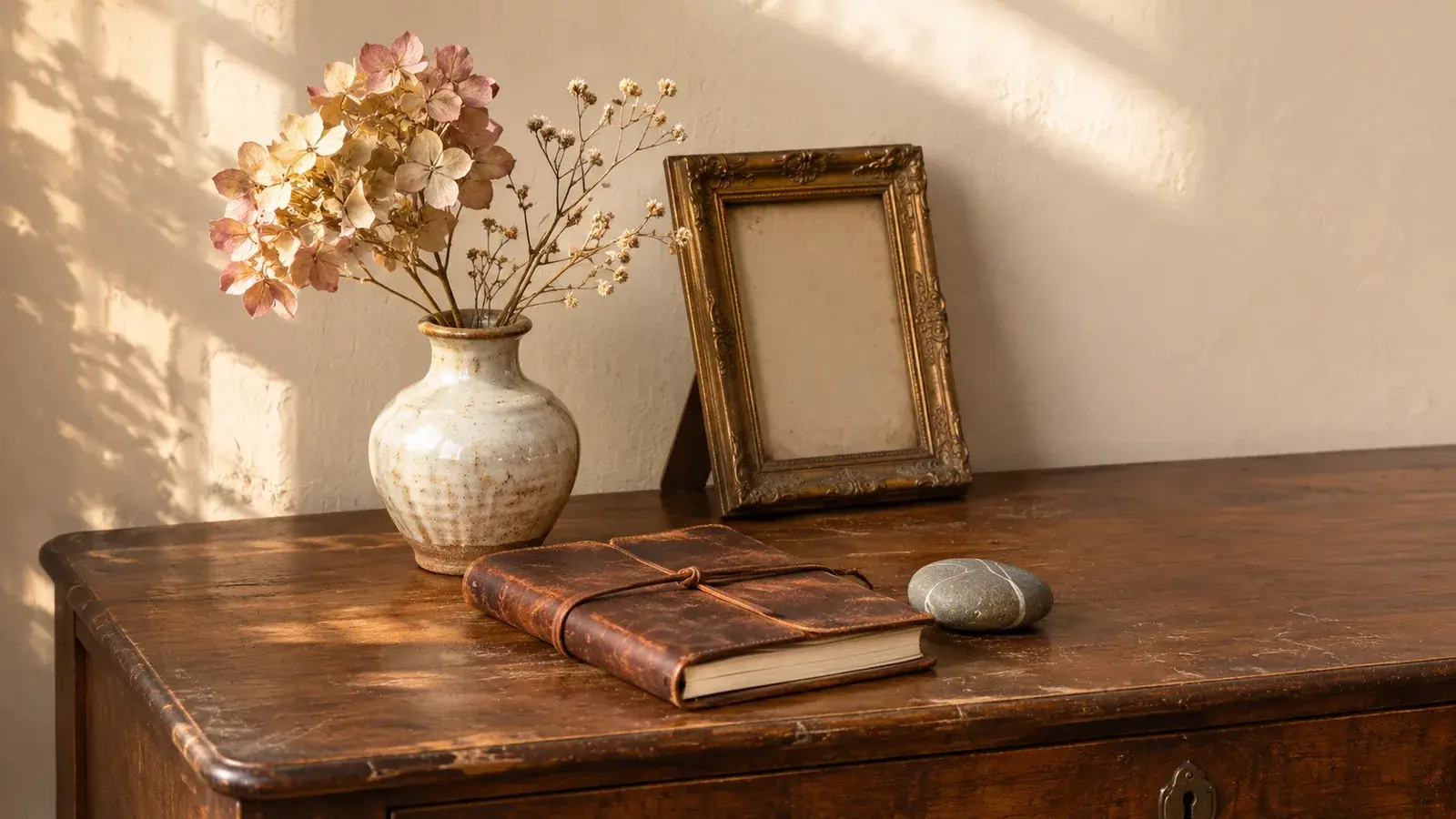
Clear the intended surface before arranging anything. Place the object you most want to notice first. Add a second piece only if it contributes something: a different height, a related color, or another part of the story.
Then step back. Can you distinguish the shapes, or has the display become one busy cluster? Remove one item and look again. Empty space lets a modest object have presence.
There is no requirement to group things in threes. A single framed photograph on a small table may be exactly enough. Nor must everything match in age or material. An old piece can look particularly good beside something plain and contemporary.
Let useful objects be useful—when appropriate
A sturdy basket can hold throws. A sound wooden box can organize correspondence. Some older pieces become more enjoyable when they participate in daily life rather than wait for visitors.
Food use is a separate question. Do not assume an old plate or cup is suitable for serving because it looks intact. Keep ceramics of uncertain food-use safety decorative until their suitability is established. The appeal of an object does not depend on drinking from it.
For visual ideas, look through vintage finds in the archive, paying attention to shape and arrangement rather than treating old shopping references as current offers.
Save the details that memory can lose
Write a short note about the objects with family significance: who owned them, what you know, and what remains uncertain. “Possibly from Aunt Helen’s first apartment” is more honest than turning a guess into a fact.
Store that note with a photograph or in a household folder. Avoid attaching tape or labels directly to a delicate surface. If you hope someone will inherit a piece, ask whether they would like it; affection for a person does not always translate into space for their furniture.
You can also rotate displays. A few things may suit the summer light, others the quieter winter rooms. Putting something away carefully is not a rejection. It can be a way to make room to enjoy it again later.
Know someone who would enjoy this?