Make Your Home’s Lighting Work for the Way You Live
The right change may be a lamp moved closer, a shaded bulb, or a switch you can reach from the chair.

The room looks bright until you try to read a recipe. Or the table feels cozy until a bare bulb catches your eye whenever you look up. Both problems can occur in a room with plenty of light. Where the light lands matters as much as how much there is.
Before replacing fixtures, try an evening walk through your home. Carry out the things you normally do and note where the lighting makes them awkward. That list is your starting point.
Look at tasks, not just rooms
At the reading chair, open a book. At the dining table, look across at the opposite seat. In the kitchen, stand where you chop or read instructions. Your body may cast a shadow on a surface that appears well lit when nobody is using it.
Write down the specific difficulty: shadow, glare, a dim working surface, or a switch in an inconvenient place. “More light” is too broad to solve all four.
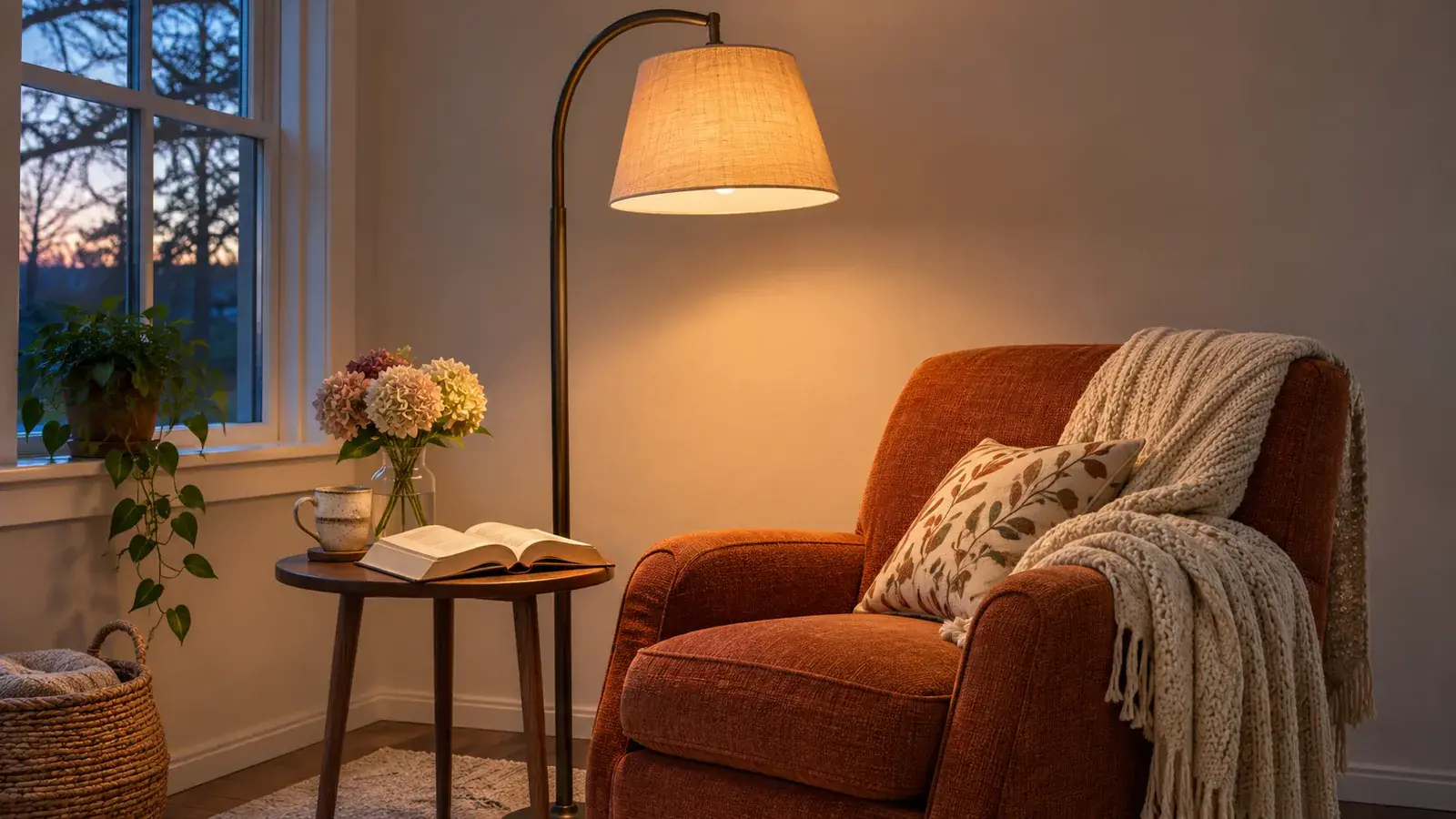
Try moving an existing lamp first. A lamp closer to the page may work better than a stronger bulb across the room. A shade can make a light source more comfortable to look toward, while an adjustable head helps direct light where you need it.
Understand two numbers on the bulb box
Lumens describe light output; watts describe energy use. Color temperature, expressed in kelvins, describes whether the light looks warmer or cooler. The Department of Energy explains these distinctions.
Use that information to compare bulbs, not to find one compulsory setting for every room. You may prefer a warmer appearance where you relax and a different light for detailed work. Test one bulb in its intended fixture before buying enough for the whole house.
Check the fixture’s maximum wattage and the bulb’s suitability for enclosed fixtures or dimmers where relevant. Do not assume every LED works with every dimmer. Electrical alterations or damaged fixtures belong with a qualified professional.
Layer a little light
A room often works better with a general source plus a light near the activity. The general light helps you see the space; the task light helps you read, sew, or write without illuminating everything equally.
For dinner, keep enough light to see plates and faces comfortably. If a central arrangement blocks the conversation or casts an awkward shadow, lower it or move it. A decorative atmosphere should not make the meal harder to enjoy.
For the trip between a chair and the doorway, look at what happens when the room’s main light is off. Is the route visible? Can you reach a switch before crossing the room? Avoid solving one dim spot with a cord that runs across the path.
Change one thing and live with it
An evening trial reveals more than choosing bulbs under store lighting. Use the adjusted setup for reading, conversation, and any close work you do. Notice glare on glasses and glossy pages, not only whether the room photographs well.
If the light is comfortable but the room still feels impersonal, add the personal detail last. The archive’s favorite home and garden corners can provide visual inspiration. The lamp itself should first do its ordinary, essential job: help you enjoy being there.
Know someone who would enjoy this?