Build a Smaller Wardrobe Around Your Actual Week
A workable wardrobe starts with the clothes your ordinary days require, not an ideal number of hangers.

A closet can be full and still leave you repeating the same two outfits. Often the problem is not a lack of clothes. It is that the clothes belong to a different schedule: an old job, an imagined vacation, a version of everyday life with more occasions and less laundry.
To build a smaller wardrobe that earns its space, start with the week you actually have. You do not need to reach a prescribed number of pieces. You need dependable choices for the things you do.
Look at activities before colors
Make a quick list of the past seven days: errands, work, gardening, lunch with a friend, an evening out, time at home. Add activities that happen less often but matter to you.
Then identify the practical demands. Do you spend hours sitting? Walk between appointments? Move from warm sidewalks into chilly rooms? Need washable clothes for a hands-on hobby? This tells you more than a list of supposed essentials.
If your days are mostly casual, a closet dominated by dressy separates will keep feeling unhelpful. Keep the occasion clothes you love, but let everyday pieces occupy the easiest-to-reach space.
Build three complete outfits
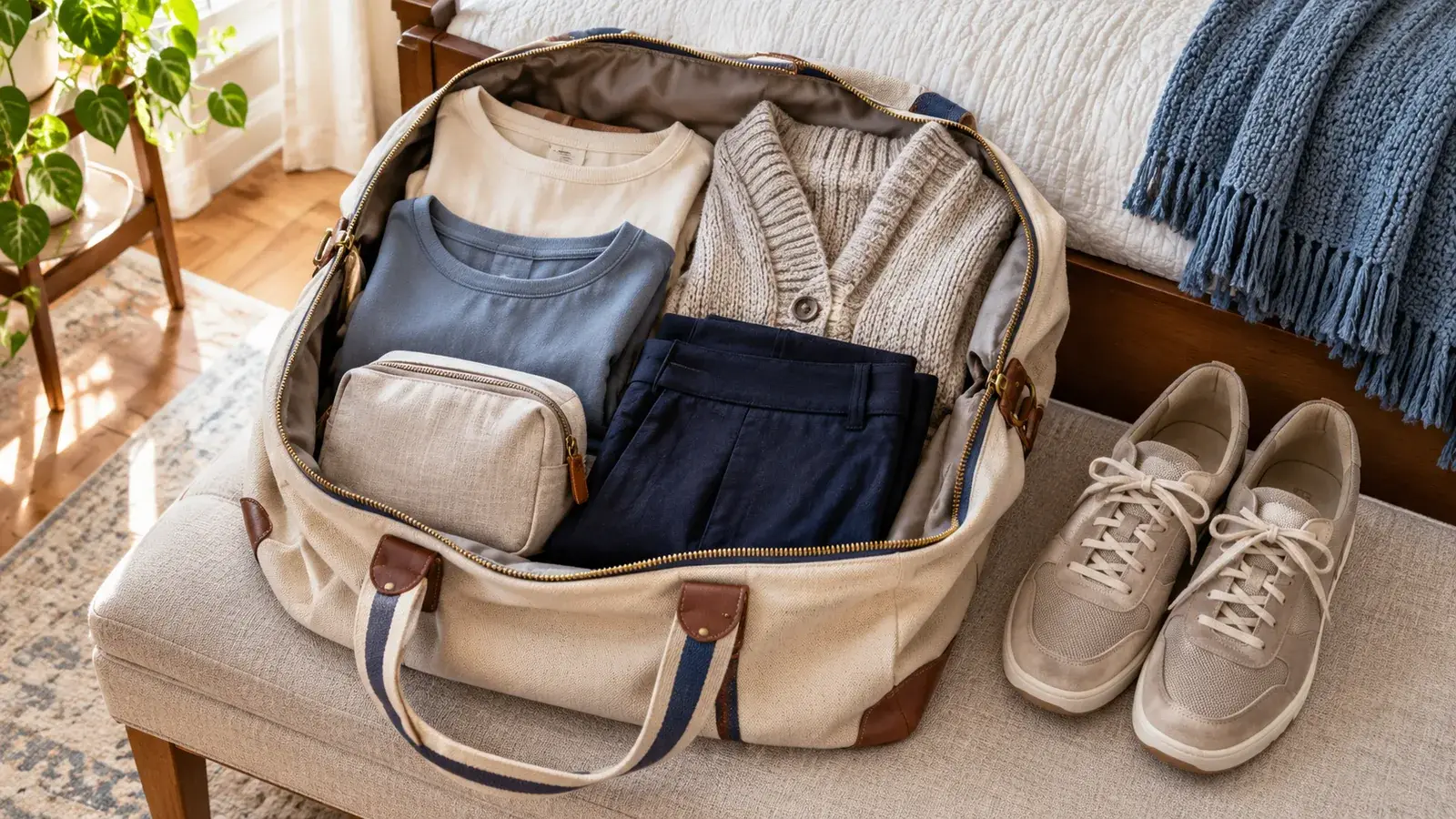
Pull out one outfit for an ordinary day, one for meeting someone, and one for the activity that is hardest to dress for. Include shoes and the layer you would carry out the door.
Wear each outfit around the house before deciding it works. Sit down, reach up, bend to pick something up, and walk in the shoes. Notice a waistband that bothers you, a neckline you keep adjusting, or sleeves that interfere with what you are doing.
An item can fit and still be inconvenient. Put those observations into words. “Needs constant adjusting” is a more useful shopping note than “I never feel right in this.”
Find the connections you already own
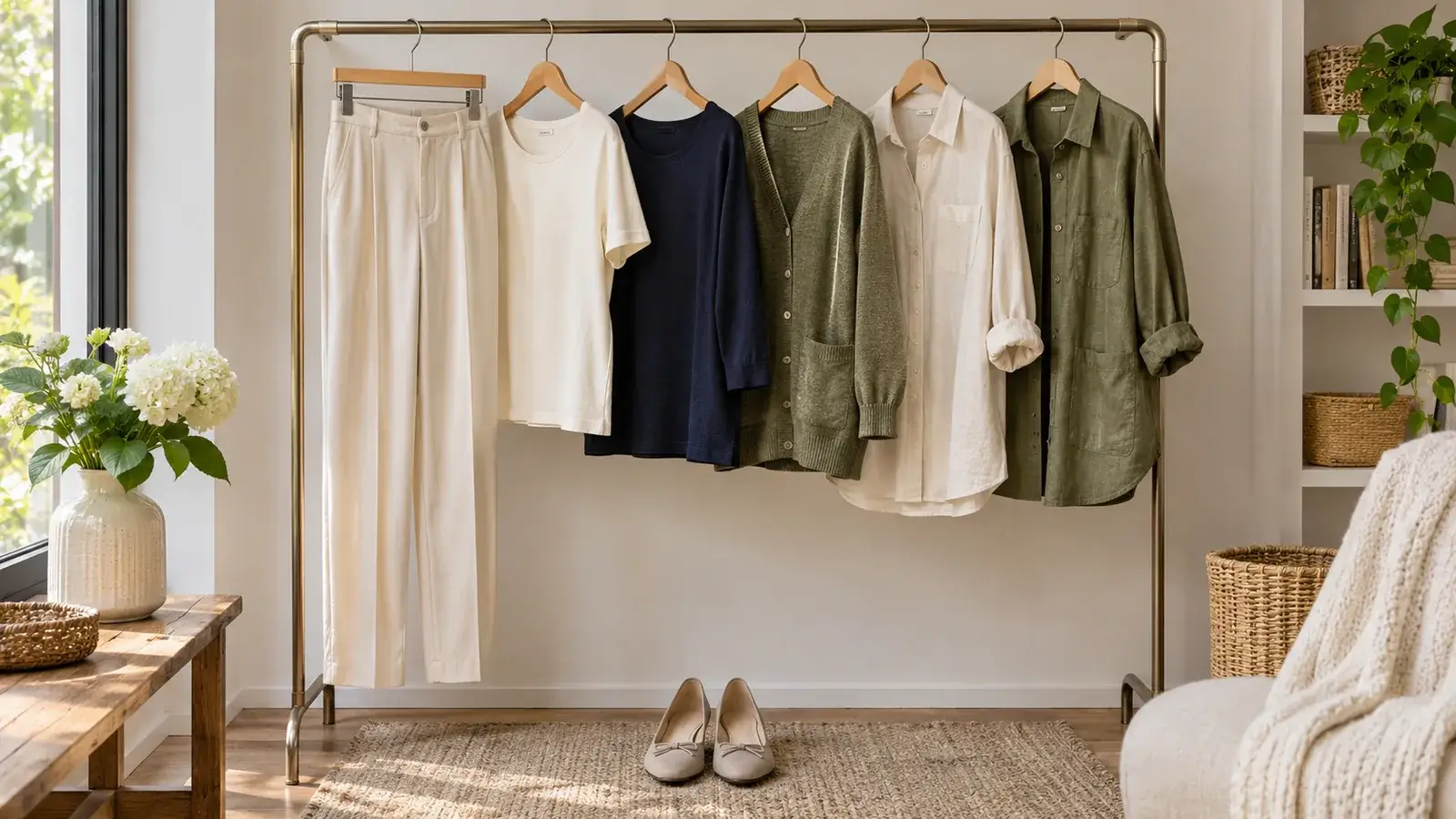
Lay the three outfits together. A cardigan that works with two of them is doing useful work. So is a pair of trousers you enjoy wearing with several tops.
You might begin with two familiar neutrals and one or two colors you like near your face. That is an organizing suggestion, not a rule. If prints are central to your style, use a recurring color to connect them rather than replacing them with plain clothes.
The archive’s summer dressing is a reminder that an individual point of view can be more interesting than a perfectly uniform wardrobe.
Buy for a named gap
Before adding anything, complete this sentence: “This will help me wear _ when _.” A lightweight layer for a favorite sleeveless dress has a clear job. A fifth nearly identical top may not.
Check care instructions as carefully as the fit. A piece that demands care you dislike will often be unavailable when you want it. Keep enough duplicates of frequently worn basics to suit your laundry routine; a tiny wardrobe is not efficient if it creates daily washing.
Set aside doubtful pieces in a separate part of the closet for a trial period. You do not have to make every keep-or-donate decision at once. Notice whether you miss them.
When getting dressed becomes easier, stop editing for a while. The reward for a smaller wardrobe is time to wear it, not another wardrobe project.
Know someone who would enjoy this?