Make the Garden Easier to Tend Before Adding More Plants
Look at the trips, lifting, and repeated tasks around the garden before deciding that you need new equipment.

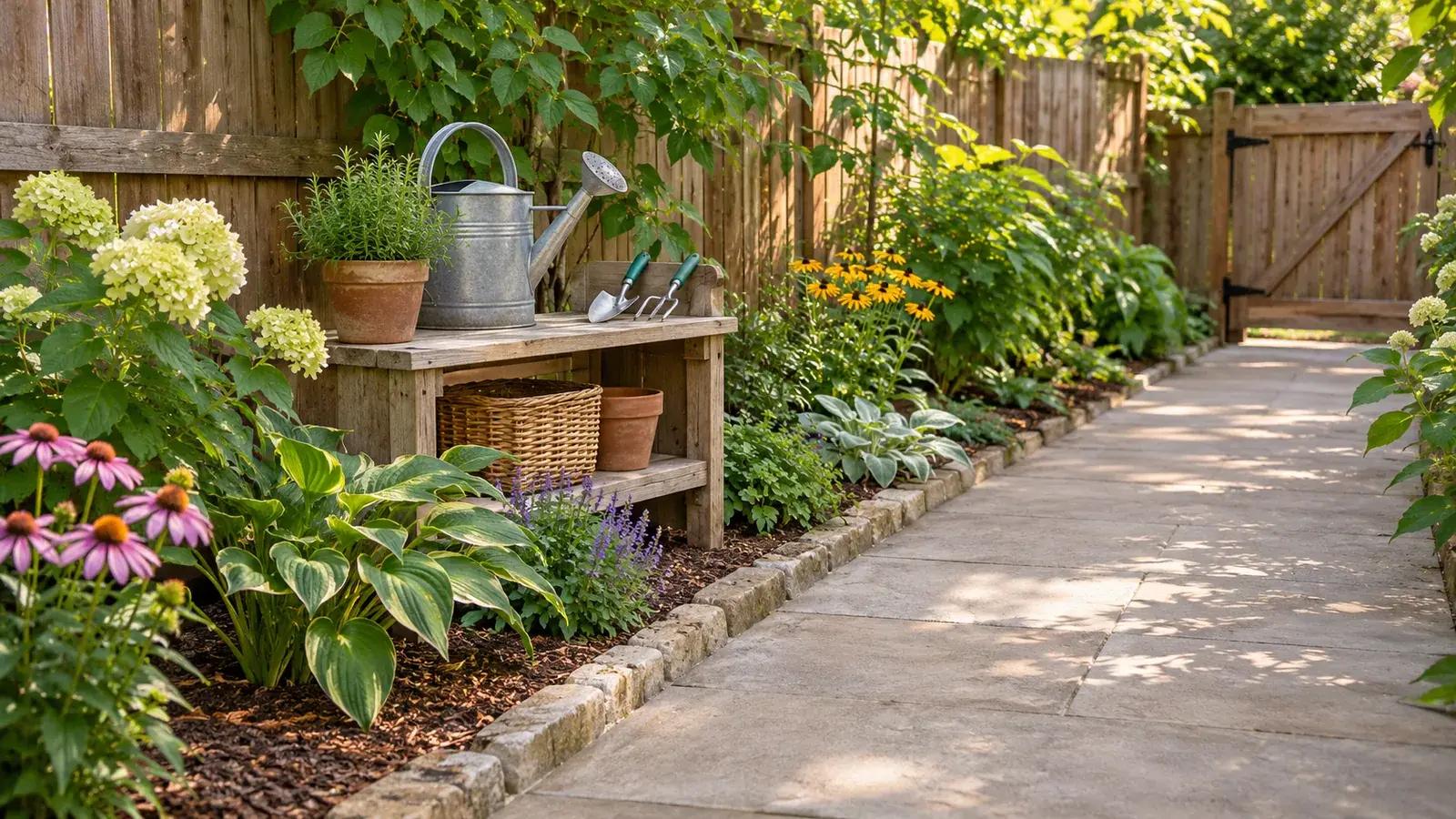
Sometimes the tiring part of gardening is not the gardening. It is carrying water from the far end of the yard, searching for a tool, or moving pots out of the way before you can reach the bed.
Before buying another device or adding another border, follow yourself through an ordinary gardening session. Look for repeated effort that does not contribute to the part you enjoy.
Map three common jobs
Choose watering, weeding, and gathering tools—or whichever tasks recur in your garden. Note where each begins, what you carry, and how often you retrace your steps.
A pot near the kitchen may be easy to check, while a matching one at the far end of the garden is regularly forgotten. A tool stored neatly in a distant shed may be less useful than a small, appropriate selection kept closer to the work.
Change one awkward route first. Move a container before it becomes heavy with fresh planting, relocate everyday tools to secure nearby storage, or reduce the number of separate places that need attention. Keep paths and access to doors clear.
Group plants thoughtfully
Plants with similar light and watering needs are easier to manage together than a mixture requiring different care in the same small area. Check the needs of your actual plants rather than relying on a label such as “low maintenance.”
Give them room for their mature size. A shrub placed too close to a path may create years of trimming simply to keep the route open. Moving or replacing one unsuitable plant can remove more work than buying a faster tool.
Containers deserve particular scrutiny. A large collection of small pots can demand frequent individual checks. You might prefer fewer containers, provided you can manage their weight and each plant has suitable conditions. Do not combine plants merely to reduce the pot count if their needs conflict.
Keep the equipment you enjoy using
Try tools in your hands before buying when possible. Consider grip, reach, weight, and the actual task. “Lightweight” or “ergonomic” on a label does not guarantee that a tool will suit you.
Maintain tools according to their instructions and store sharp items securely. Put frequently used items where retrieving them does not require moving everything else. A simple inventory can also prevent buying a replacement for something you already own but cannot find.
For heavy work, unstable branches, or tasks beyond what you want to handle, arranging help is a reasonable part of tending a garden. It does not make the garden less yours.
Decide which work you still want
Some tasks are a pleasure. You may enjoy deadheading roses or hand-watering a few favorite pots while wanting much less lawn edging. Keep the work that connects you to the garden and reconsider the work that merely maintains a layout you no longer love.
The archive’s favorite home and garden views can prompt a useful question: which parts of your own space would you miss most?
Give those areas your attention first. A smaller garden you enjoy regularly can offer more than a larger one that leaves you feeling continually behind.
Know someone who would enjoy this?