A Reading Corner That Fits the Life You Have
A good reading corner begins with the way you sit, the light on the page, and permission to leave a book within reach.

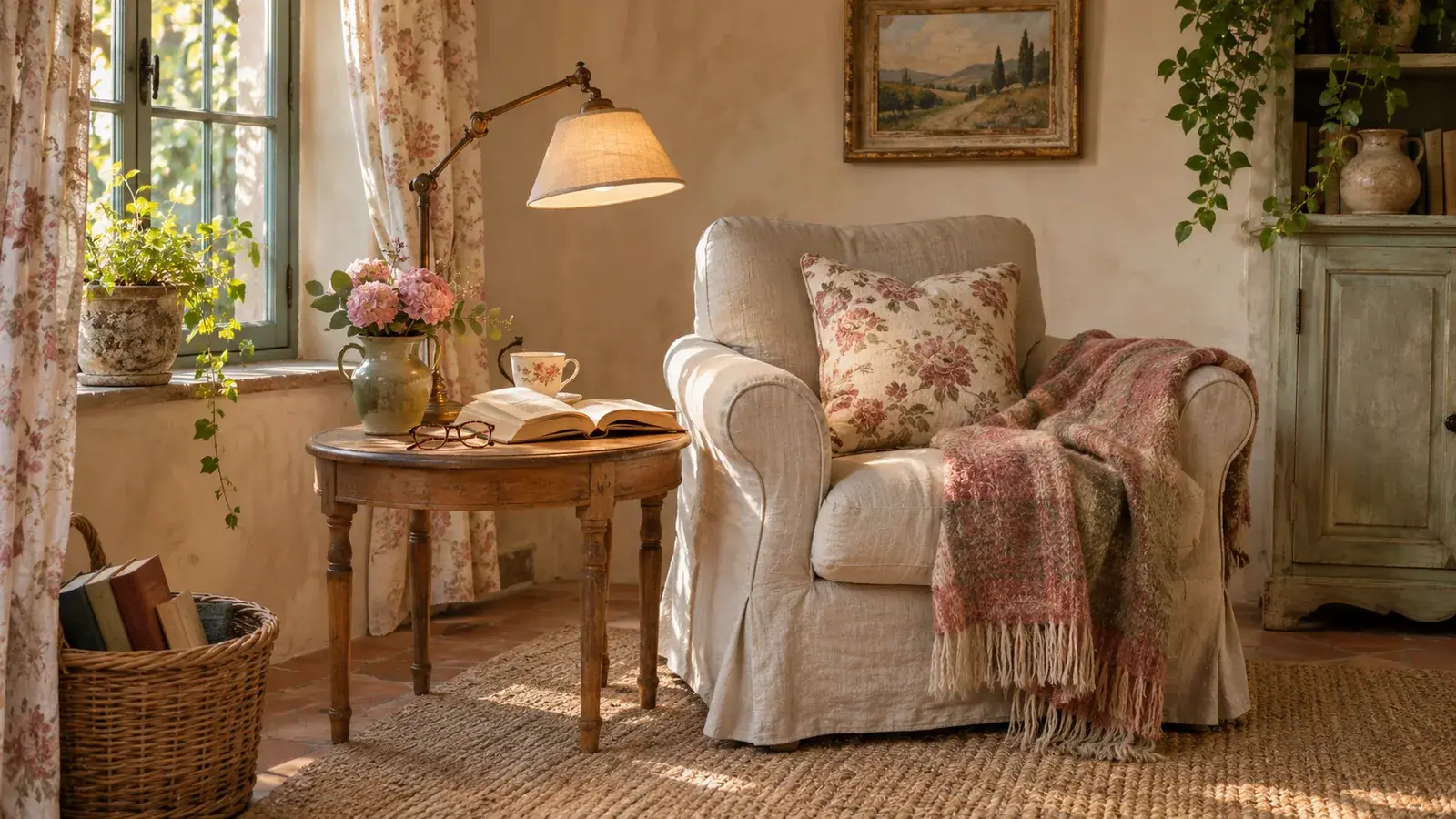
The chair you mean to read in and the chair you actually choose may be two different chairs. One looks lovely beside the window. The other supports your back, has a lamp within reach, and lets you put down a cup without leaning across an armrest.
Begin with the second chair. A comfortable reading corner is a small arrangement that removes interruptions: somewhere to sit easily, enough light to see the page, and a resting place for the things you use. It does not require an empty room or a shopping trip.
Try the spot before you arrange it
Take a book to the place you are considering at the time you usually read. Morning light can make a corner appealing that feels dim after dinner. A window may also put a reflection across a tablet or leave your page in shadow.
Sit long enough to notice the chair. Can your feet rest comfortably? Do you keep shifting a cushion to support your back? Is getting up straightforward? A chair that works for someone else’s body need not work for yours. Borrow a cushion or footrest you already own and test the difference before buying anything.
Pay attention to the room around you, too. Some readers enjoy company and kitchen sounds; others lose the thread whenever someone passes. Neither preference is wrong. Put the chair where your attention feels at home.
Bring the light to the page
A shaded, adjustable lamp gives you more control than relying on an overhead fixture alone. Move it until it lights the open book without putting the bulb in your line of sight. If the page is glossy, shift the lamp rather than simply making the room brighter.
Choose a position where you can reach the switch while seated. Keep the cord against a wall and out of the walking route; a beautiful arrangement is not useful if you must step over it. Follow the fixture’s bulb rating and compatibility instructions when replacing a bulb.
Test the setup with both a book and anything else you read there. Large print, an e-reader’s adjustable type, and a book stand are ordinary options, not concessions. Choose what makes the reading itself pleasant.
Give the table one clear job
The side table needs room for your current book, glasses if you use them, and a drink. Sit down and try setting the cup on it. If you have to twist or reach, move the table closer or swap it for something at a more useful height.
A stack of unread books can make the corner feel like homework. Keep the book you are enjoying and perhaps one alternative nearby. Put the rest where they will not become a daily reminder of unfinished intentions.
For a shared room, a small basket can hold your book and a light throw. Leave space to move around it. The basket is useful only if returning things to it is easier than putting them somewhere else.
Let the corner look like yours
One personal detail is enough: a small framed photograph, a favorite textile, or a vase that leaves room for the cup. Our archive’s vintage storage ideas offer another way to think about familiar objects that can earn their place through use.
Try the arrangement for a week. Notice what you keep moving and what you never touch. The final test is pleasingly simple: when there is a little time to read, do you want to sit there?
Know someone who would enjoy this?