Your First Potted Rose: Start With the Place, Then the Plant
Before choosing a rose for its color, look at the light, the room its roots will need, and how you will care for it through the seasons.

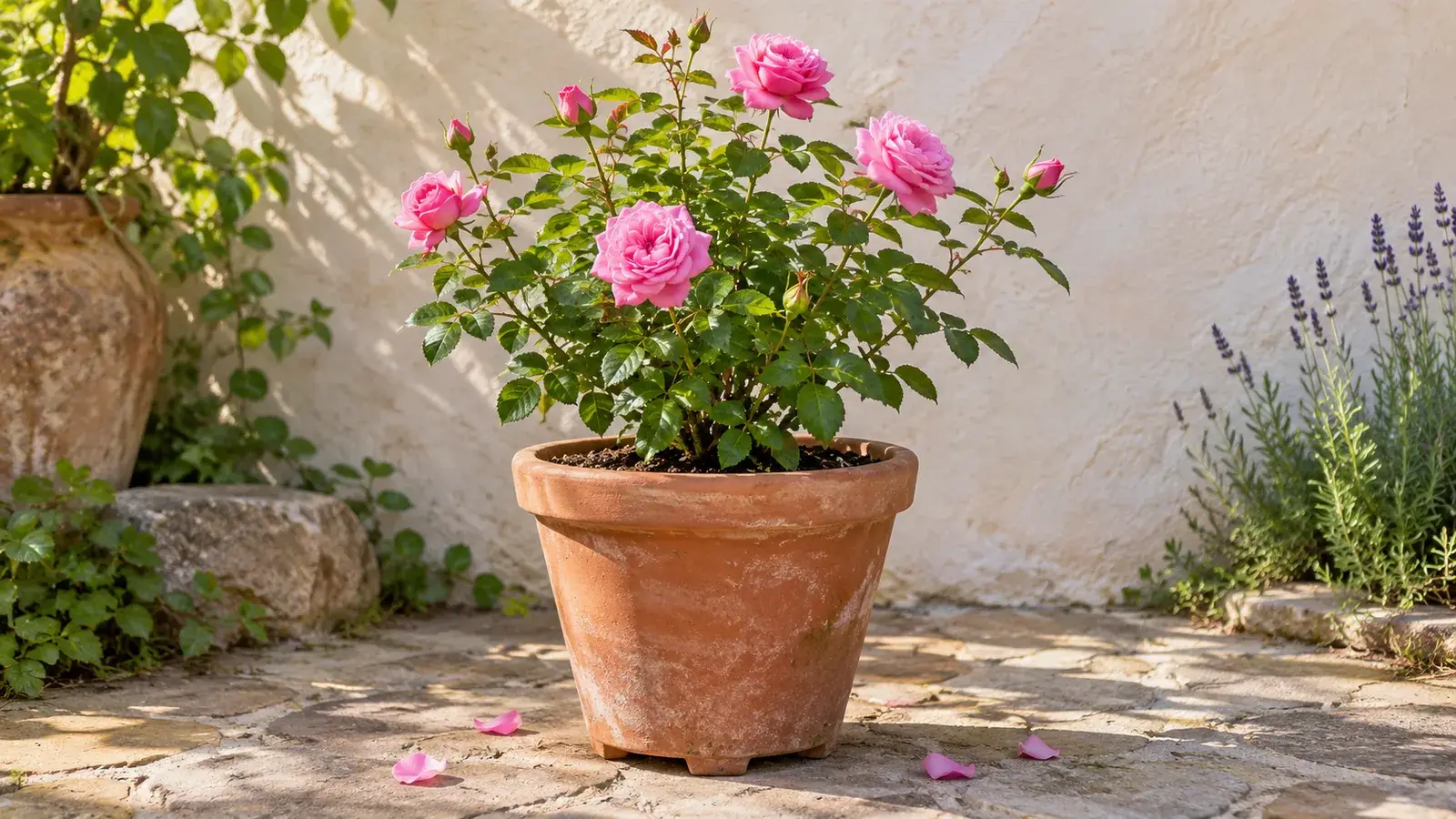
A single rose beside a doorway can be enough to change how you use that space. You notice a bud opening while carrying out the watering can; later, you move a chair a little closer. The temptation is to choose the flower first. For a rose grown in a pot, choosing its place first is the more useful beginning.
Walk through the following decisions before bringing a plant home. They will help you avoid buying a rose that needs a very different garden from the one you have.
Count the sunny hours
Watch the proposed position over a clear day. Bright shade is not the same as direct sun, and a spot that is sunny at breakfast may be shaded by noon.
University of Illinois Extension’s rose guidance recommends at least six hours of sun daily, good air circulation, and adequate drainage. Its advice also favors morning sun when all-day sun is unavailable. Local heat and exposure still matter: ask a nearby nursery or extension office how roses fare in your particular setting.
If the location does not offer enough sun, consider another plant for that spot rather than asking a rose to struggle there. A smaller plant does not automatically need less light.
Match the mature plant to the container
Read the mature height and width, not just the size of the rose in its nursery pot. A compact variety described as suitable for containers is a more manageable starting point than a vigorous climber. Ask about disease resistance in your area, too; a beautiful catalog photograph cannot answer that question.
Choose a sturdy pot with drainage holes and room for the variety’s developing roots. There is no single pot measurement that suits every rose. Have the nursery help match the plant, container, and expected repotting needs rather than choosing by color alone.
Remember the weight after watering. Set the pot in its intended position before filling it. If you need to move it seasonally, plan that move now instead of assuming you can lift a heavy planted container later.
Make watering observable
Use a potting mix intended for containers, following the plant supplier’s planting guidance. Do not seal drainage holes to protect a patio. If you use a saucer, avoid leaving the pot standing in collected water. Illinois Extension explains why free drainage matters for container roots.
Check the mix regularly rather than watering by a fixed calendar. Heat, wind, pot material, and plant size affect how quickly it dries. Water when the plant needs it, thoroughly enough for excess water to drain, and adjust your routine as conditions change. Ask for specific feeding advice for the rose and mix you have chosen; more fertilizer is not a substitute for suitable light or watering.
Decide what happens in winter
A rose that is hardy in the ground may need additional protection in a container, where roots are more exposed. Your winter plan will depend on your climate, rose, and available sheltered space. Get local advice before buying, particularly if there is nowhere practical to protect a heavy pot.
Keep the plant label and jot down the variety, planting date, and where it sits. A few notes about flowering and watering will be more useful next year than trying to remember which pink rose you bought.
For a little visual encouragement, browse the archive’s rose garden photographs. Use them to discover what you like, then let your own growing conditions make the final choice.
Know someone who would enjoy this?