Five Small Questions That Can Open a Family Story
An ordinary detail—a kitchen, a first paycheck, a favorite dress—can make a more welcoming beginning than a request for someone’s life story.

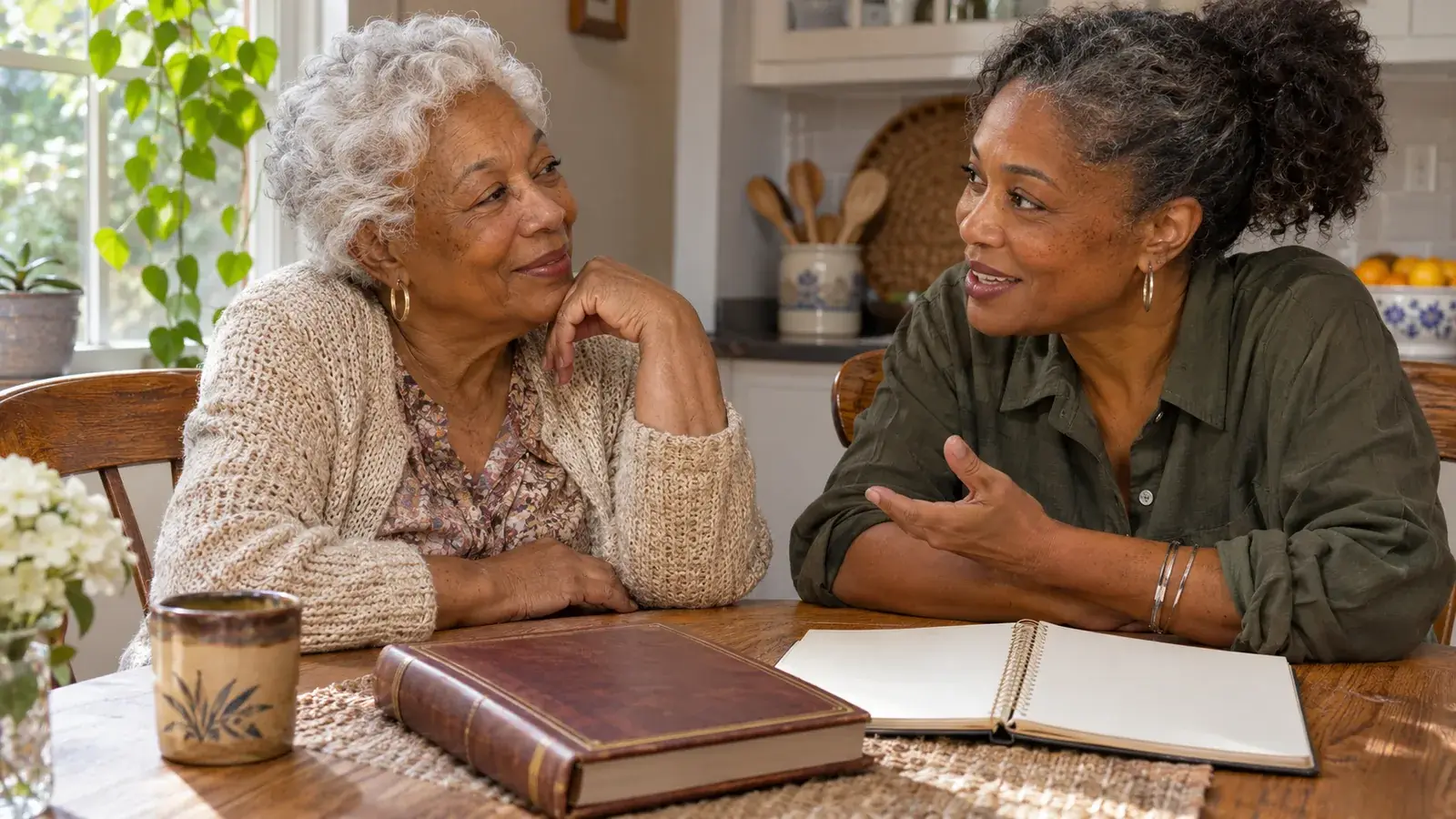
“Tell me about your childhood” can be an unexpectedly large request. A smaller question—what the kitchen looked like, or who usually sat nearest the window—gives a person somewhere to begin.
You do not need to conduct a formal interview to preserve a family story. You need attention, permission, and a way to keep the details from disappearing after the conversation.
Start with an invitation, not a recording button
Explain what you hope to do and ask whether the person would enjoy it. Find out if they prefer notes, audio, or no recording at all. Agree on who may hear or read the result and whether it could ever be shared more widely.
Keep the first conversation short enough to feel comfortable. A person may welcome one topic and not another. Passing over a question is always an option; a family archive is not a reason to press someone for a painful memory.
Five questions to try
1. What did the place you lived in look like?
Ask about one room or a view from a window. Follow the details the speaker chooses: a table, a garden, the sound of the street. These can lead naturally to people and routines without demanding a complete chronology.
2. What was an ordinary weekday like?
A regular breakfast, a journey to work, or the way laundry was done may reveal more about daily life than a list of important dates. Ask how the routine changed over time rather than assuming it stayed the same.
3. What did you buy with money you earned yourself?
The answer might be practical, extravagant, or very small. Let the speaker decide what made it memorable. Avoid turning the conversation into a comparison of how much easier or harder life was in different generations.
4. Who taught you something you still use?
This can open a story about cooking, gardening, work, manners, or a skill. Ask for the person’s name and how they knew each other. A remembered lesson can also lead to an object worth photographing or a recipe worth writing down.
5. Is there an everyday object that reminds you of a particular time?
Bring out a photograph or keepsake if the person would like that. Let them handle and describe it at their own pace. Ask what they know about it and what they are guessing. Both can belong in the record, clearly distinguished.
Save the context with the story
Afterward, record the date of the conversation, the speaker’s name, who was present, and any limits on sharing. Write unfamiliar names while you can still ask about spelling. If a date is uncertain, label it approximate instead of choosing one for neatness.
Keep the original recording or notes as well as any edited version, with a separate backup. Give the speaker a chance to correct names, clarify a point, or remove something before wider sharing. Editing for readability should not change what they meant.
Your family record does not need a dramatic revelation. A clear account of a kitchen, a friendship, or a favorite Saturday may be exactly what someone will treasure later. Label it well enough that a reader who was not in the room can understand whose story it is.
Know someone who would enjoy this?