Choose a Train Trip for the Journey You Want
The view is one part of the experience. The stations at both ends matter just as much when you want an unhurried day.

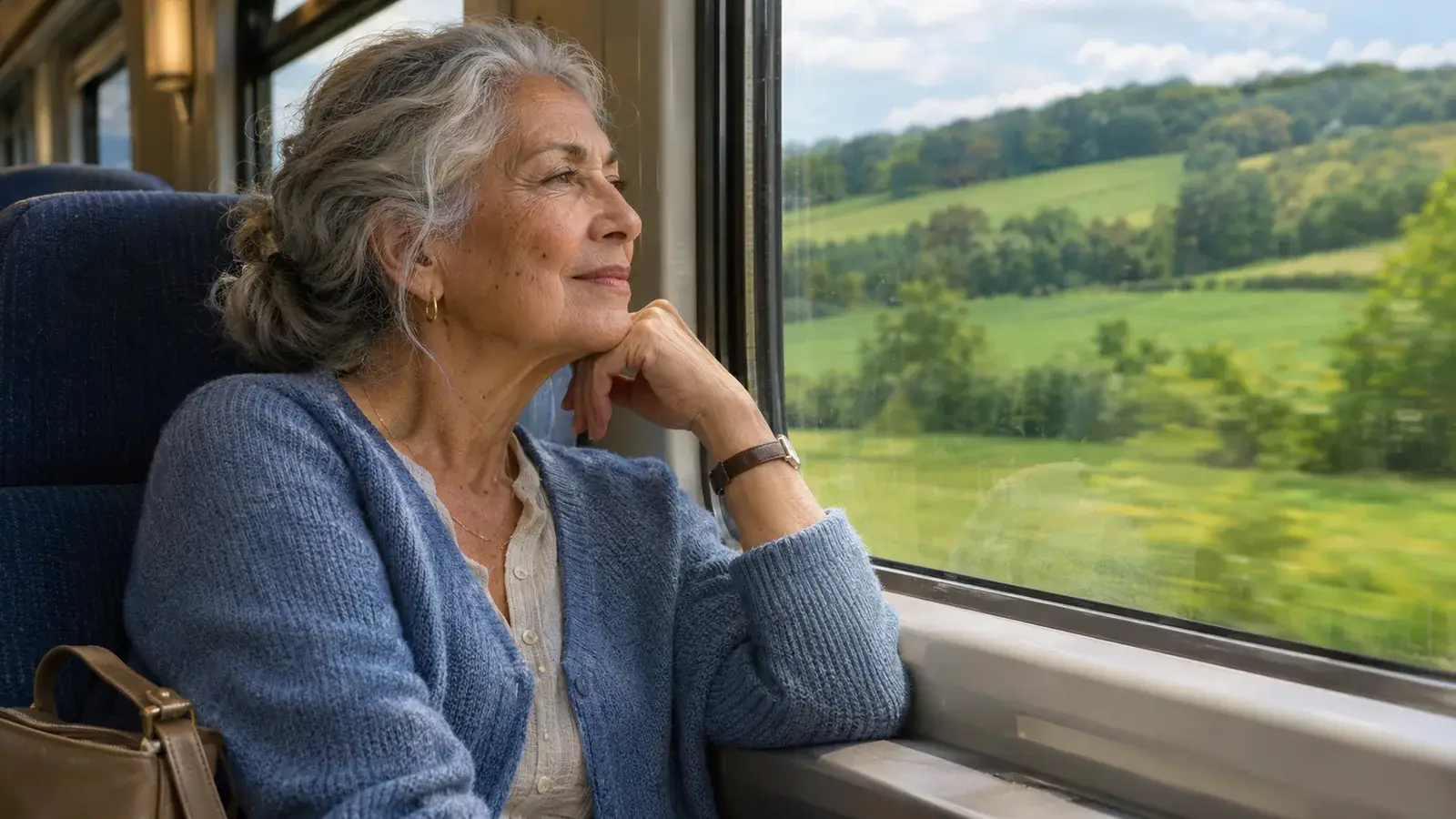
A photograph of a train beside a river makes the decision seem simple. But a pleasant rail outing depends on more than the view. The time of day, the station at each end, and the journey home can determine whether the trip feels relaxed or complicated.
Before choosing a route, decide what you want: several hours watching the landscape, a day in another town, or a short overnight break. Those are different trips, even if they use the same train.
Compare the whole journey
Look at the time from leaving home to returning, including reaching the station, waiting, and any onward transport. A short train ride may involve a long transfer at either end.
Check whether the part of the route you most want to see is scheduled in daylight. Timetables change, and delays can affect the experience. Avoid building the pleasure of the whole trip around one precise view at one precise minute.
A direct service can be simpler than an itinerary with a tight connection. If a connection is necessary, understand what happens if the first train is late and which arrangements are covered by your booking.
Treat both stations as part of the destination
Amtrak’s station information covers details such as hours, parking, restrooms, baggage services, and access. Check the specific origin and destination rather than assuming all stations offer the same facilities.
If you need assistance or particular access features, consult Amtrak’s accessibility guidance and confirm the arrangements for your journey. Availability can differ by station and service. A general promise of assistance is not a substitute for checking your exact needs.
For a different rail operator, use that operator’s official information. A tourist railway and an intercity train may have very different boarding, seating, and luggage arrangements.
Ask these questions before booking
Can I reach and leave each station comfortably?
The train may be straightforward while the last part of the journey is not.
Does the schedule leave useful time at the destination?
A very short stop can make the day feel rushed.
What is the practical return option if plans change?
You need to understand the consequences of a missed or canceled service.
Can I manage the luggage I intend to bring?
Storage space and assistance are not identical on every train.
What food and restroom arrangements apply?
Do not assume a short or scenic service offers the same amenities as another train.
Read fare and cancellation terms before paying. Keep essential booking details available without depending entirely on a live connection.
Leave room to enjoy the ride
Bring a layer, any personal essentials, and something to read if you want it. A window is part of the attraction, but there may be stretches where the landscape is ordinary or the view is obstructed. Let the journey be more than a continuous photo opportunity.
At the destination, choose one main activity within a practical distance of your return route. Keep enough room before the return departure to reach the station comfortably rather than relying on every part of the afternoon running exactly to plan.
A good first rail outing need not be famous or far away. It needs a manageable journey, a reason you want to go, and enough time to return without hurrying through the part you came to enjoy.
Know someone who would enjoy this?